Calendar date · November

What happened on November 2

On November 2, 619: A qaghan of the Western Turkic Khaganate is assassinated in a Chinese palace by Eastern Turkic rivals after the approval of Tang emperor Gaozu.

Events

44

across history

Notable births

50

Notable deaths

50

Zodiac

Scorpio

People

Born on November 2

Moisés Caicedo 2001– Ecuadorian footballer (born 2001)
Park Woo-jin 1999– South Korean rapper (born 1999)
Jordan Love 1998– American football player (born 1998)
Filip Hronek 1997– Czech ice hockey player (born 1997)
Davis Keillor-Dunn 1997– English footballer (born 1997)
Hanna Öberg 1995– Swedish biathlete (born 1995)
Shaq Coulthirst 1994– English footballer (born 1994)
Jimmy Garoppolo 1991– American football player (born 1991)
Christopher Dibon 1990– Austrian footballer
Show 9 more — notable births on November 2
Kendall Schmidt 1990– Musical artist
Tibor Pleiß 1989– German basketball player (born 1989)
Natalie Pluskota 1989– American tennis player
Luke Schenn 1989– Canadian ice hockey player (born 1989)
Lisa Bowman 1988– Northern Ireland netball player
Julia Görges 1988– German tennis player (born 1988)
Danny Cipriani 1987– England rugby union player (born 1987)
Andy Rautins 1986– American-born Canadian basketball player
Danny Amendola 1985– American football player (born 1985)

People

Died on November 2

Janey Godley Scottish actress, writer and comedian (1961–2024)
Alan Rachins American actor and comedian (1942–2024)
Paul Stephenson British civil rights activist (1937–2024)
Humaira Himu Bangladeshi actress (1985–2023)
Atilio Stampone Argentine pianist and composer (1926–2022)
Neal Smith American politician (1920–2021)
Walter Mercado Puerto Rican astrologer (1932–2019)
Raymond Chow Hong Kong film producer
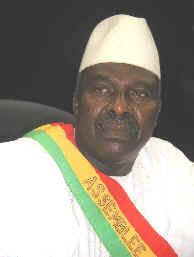
Aboubacar Somparé Guinean politician (1944–2017)
Show 9 more — notable deaths on November 2
Andrzej Ciechanowiecki Polish-British nobleman
Mike Davies Welsh professional tennis player, entrepreneur and administrator (1936–2015)
Roy Dommett British aerospace engineer
Tommy Overstreet American country music singer (1937–2015)
Acker Bilk English clarinetist and vocalist (1929–2014)
Michael Coleman American songwriter
Veljko Kadijević Yugoslav military commander and politician
Herman Sarkowsky American businessman and philanthropist (1925–2014)
Shabtai Teveth Israeli historian (1925–2014)

Timeline

Every November 2 on record

  1. 619 A qaghan of the Western Turkic Khaganate is assassinated in a Chinese palace by Eastern Turkic rivals after the approval of Tang emperor Gaozu.

    Imperial title of Mongolic and Turkic societies

    Khagan or Qaghan is a title of imperial rank in Turkic, Mongolic, and some other languages, equal to the status of emperor and someone who rules a khaganate (empire). The female equivalent is Khatun.

  2. 1410 The Peace of Bicêtre suspends hostilities in the Armagnac–Burgundian Civil War.

    Hospital in Paris, France

    The Bicêtre Hospital is located in Le Kremlin-Bicêtre, a commune in the southern suburbs of Paris, France. 5 km from the center of Paris. The Bicêtre Hospital was originally planned as a military hospital, with construction begun in 1634.

  3. 1675 Plymouth Colony governor Josiah Winslow leads a colonial militia against the Narragansett during King Philip's War.

    English colonial venture in America (1620–1691)

    Plymouth Colony was the first permanent English colony in New England, founded in 1620, and the third permanent English colony in America, after Newfoundland and the Jamestown Colony. It was settled by the passengers on the Mayflower at a location that had previously been surveyed and named by Captain John Smith. The settlement served as the capital of the colony and developed as the town of Plymouth, Massachusetts.

  4. 1707 Four British naval vessels run aground on the Isles of Scilly because of faulty navigation. In response, the first Longitude Act is enacted in 1714.

    Royal Navy ship loss in storm

    The Scilly naval disaster of 1707 was the loss of four warships of a Royal Navy fleet off the Isles of Scilly near the British mainland when they struck rocks on 22 October 1707. Between 1,400 and 2,000 sailors lost their lives aboard the wrecked vessels, making the incident one of the worst maritime disasters in British naval history. The disaster has been attributed to a combination of factors, including navigators' inability to accurately calculate their positions, errors in the available charts and pilot books, and inadequate compasses.

  5. 1795 The French Directory, a five-man revolutionary government, is created.

    Executive power of the French Constitution of 1795–1799

    The Directory was the system of government established by the French Constitution of 1795. It takes its name from the committee of five men vested with executive power. The Directory governed the French First Republic from 26 October 1795 until 9 November 1799, when it was overthrown by Napoleon Bonaparte in the Coup of 18 Brumaire and replaced by the Consulate.

  6. 1868 Time zone: New Zealand officially adopts a standard time to be observed nationally.
  7. 1882 The great fire destroys a large part of Oulu's city center in Oulu Province, Finland.
  8. 1889 North Dakota and South Dakota are admitted as the 39th and 40th U.S. states.
  9. 1899 The Boers begin their 118-day siege of British-held Ladysmith during the Second Boer War.
  10. 1912 Bulgaria defeats the Ottoman Empire in the Battle of Lule Burgas, the bloodiest battle of the First Balkan War, which opens her way to Constantinople.
  11. 1914 World War I: The Russian Empire declares war on the Ottoman Empire and the Dardanelles is subsequently closed.
  12. 1917 The Balfour Declaration proclaims British support for the "establishment in Palestine of a national home for the Jewish people" with the clear understanding "that nothing shall be done which may prejudice the civil and religious rights of existing non-Jewish communities".
  13. 1917 The Military Revolutionary Committee of the Petrograd Soviet, in charge of preparation and carrying out the Russian Revolution, holds its first meeting.
  14. 1920 In the United States, KDKA of Pittsburgh starts broadcasting as the first commercial radio station. The first broadcast is the result of the 1920 United States presidential election.
  15. 1936 The BBC Television Service, the world's first regular, "high-definition" (then defined as at least 200 lines) service begins. Renamed BBC1 in 1964, the channel still runs to this day.
Show 15 earlier entries from November 2
  1. 1940 World War II: First day of Battle of Elaia–Kalamas between the Greeks and the Italians.
  2. 1947 In California, designer Howard Hughes performs the maiden (and only) flight of the Hughes H-4 Hercules (also known as the "Spruce Goose"), the largest fixed-wing aircraft ever built until Scaled Composites rolled out their Stratolaunch in May 2017.
  3. 1949 The Dutch–Indonesian Round Table Conference ends with the Netherlands agreeing to transfer sovereignty of the Dutch East Indies to the United States of Indonesia.
  4. 1951 Canada in the Korean War: A platoon of The Royal Canadian Regiment defends a vital area against a full battalion of Chinese troops in the Battle of the Song-gok Spur. The engagement lasts into the early hours the next day.
  5. 1956 Hungarian Revolution: Nikita Khrushchev meets with leaders of other Communist countries to seek their advice on the situation in Hungary, selecting János Kádár as the country's next leader on the advice of Josip Broz Tito.
  6. 1956 Suez Crisis: Israel occupies the Gaza Strip.
  7. 1959 Quiz show scandals: Twenty-One game show contestant Charles Van Doren admits to a Congressional committee that he had been given questions and answers in advance.
  8. 1959 The first section of the M1 motorway, the first inter-urban motorway in the United Kingdom, is opened between the present junctions 5 and 18, along with the M10 motorway and M45 motorway.
  9. 1960 Penguin Books is found not guilty of obscenity in the trial R v Penguin Books Ltd, the Lady Chatterley's Lover case.
  10. 1963 South Vietnamese President Ngô Đình Diệm is assassinated following a military coup.
  11. 1964 King Saud of Saudi Arabia is deposed by a family coup, and replaced by his half-brother Faisal.
  12. 1965 Norman Morrison, a 31-year-old Quaker, sets himself on fire in front of the river entrance to the Pentagon to protest the use of napalm in the Vietnam war.
  13. 1966 The Cuban Adjustment Act comes into force, allowing 123,000 Cubans the opportunity to apply for permanent residence in the United States.
  14. 1967 Vietnam War: US President Lyndon B. Johnson and "The Wise Men" conclude that the American people should be given more optimistic reports on the progress of the war.
  15. 1973 Aeroflot Flight 19 is hijacked and diverted to Vnukovo International Airport, where the aircraft is stormed by authorities.

Around the world

Holidays on November 2

Keep going

More to explore