Calendar date · January

What happened on January 5

On January 5, 1477: Battle of Nancy: Charles the Bold is defeated and killed in a conflict with René II, Duke of Lorraine; Burgundy subsequently becomes part of France.

Events

41

across history

Notable births

50

Notable deaths

50

Zodiac

Capricorn

People

Born on January 5

Walker Scobell 2009– American actor (born 2009)
Shane Wright 2004– Canadian ice hockey player (born 2004)
Mykhailo Mudryk 2001– Ukrainian footballer (born 2001)
Ellis Simms 2001– English footballer (born 2001)
Gastón Martirena 2000– Uruguayan footballer (born 2000)
Mattias Svanberg 1999– Swedish footballer (born 1999)
Filip Ugrinić 1999– Swiss footballer (born 1999)
Carles Aleñá 1998– Spanish footballer (born 1998)
Corey Horsburgh 1998– Australian rugby league footballer (born 1998)
Show 9 more — notable births on January 5
Jesús Vallejo 1997– Spanish footballer (born 1997)
James Fisher-Harris 1996– New Zealand and Māori international rugby league footballer
Nicolás Tripichio 1996– Argentine footballer
Tyler Ulis 1996– American basketball player and coach (born 1996)
Toafofoa Sipley 1995– Niue international rugby league footballer
Lachlan Fitzgibbon 1994– Australian rugby league footballer (born 1994)
Zemgus Girgensons 1994– Latvian ice hockey player (born 1994)
Matt Grzelcyk 1994– American ice hockey player (born 1994)
Tyrone Phillips 1994– Fiji international rugby league footballer

People

Died on January 5

Mike Rinder American Scientology critic (1955–2025)
Costas Simitis Prime Minister of Greece from 1996 to 2004
Joseph Lelyveld American journalist (1937–2024)
Mário Zagallo Brazilian footballer and manager (1931–2024)
Kim Mi-soo South Korean actress (1992–2022)
Colin Bell English professional footballer (1946–2021)
John Georgiadis British violinist and conductor (1939–2021)
Tafazzul Haque Habiganji Bangladeshi Islamic advocacy group
Bernice Sandler American women's rights activist (1928–2019)
Show 9 more — notable deaths on January 5
Dragoslav Šekularac Yugoslav and Serbian footballer and coach (1937–2019)
Asghar Khan First native Pakistani Air Chief (1921-2018)
Thomas Bopp American astronomer (1949–2018)
Karin von Aroldingen German ballet dancer
Jill Saward English campaigner and author
Pierre Boulez French composer and conductor (1925–2016)
Jean-Pierre Beltoise French racing driver and motorcycle road racer (1937–2015)
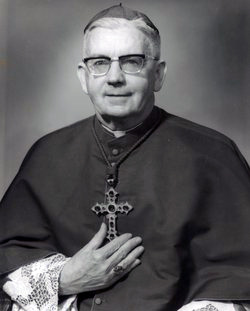
Bernard Joseph McLaughlin Catholic bishop (1912–2015)
Eusébio Portuguese footballer (1942–2014)

Timeline

Every January 5 on record

  1. 1477 Battle of Nancy: Charles the Bold is defeated and killed in a conflict with René II, Duke of Lorraine; Burgundy subsequently becomes part of France.

    Part of the Burgundian Wars, 1477

    The Battle of Nancy was the final and decisive battle of the Burgundian Wars, fought on 5 January 1477 outside the walls of Nancy, Lorraine by Charles the Bold, Duke of Burgundy, against René II, Duke of Lorraine, and the Swiss Confederacy. René's forces won the battle, and Charles' mutilated body was found two days later.

  2. 1675 Battle of Colmar: The French army defeats forces from Austria and Brandenburg.

    1675 battle of the Franco-Dutch War

    The Battle of Turckheim took place on 5 January 1675 during the Franco-Dutch War at a site between the towns of Colmar and Turckheim in Alsace. The French army, commanded by the Viscount of Turenne, defeated the armies of Austria and Brandenburg, led by Alexander von Bournonville and Frederick William, Elector of Brandenburg.

  3. 1757 Louis XV of France survives an assassination attempt by Robert-François Damiens, who becomes the last person to be executed in France by drawing and quartering (the traditional form of capital punishment used for regicides).

    King of France from 1715 to 1774

    Louis XV, known as Louis the Beloved, was King of France from 1 September 1715 until his death in 1774. He succeeded his great-grandfather Louis XIV at the age of five. Until he reached maturity in 1723, the kingdom was ruled by his grand-uncle Philippe II, Duke of Orléans, as Regent of France.

  4. 1781 American Revolutionary War: Richmond, Virginia, is burned by British naval forces led by former American general Benedict Arnold.

    1775–1783 conflict in North America

    The American Revolutionary War, also known as the Revolutionary War or American War of Independence, was the armed conflict that comprised the final eight years of the broader American Revolution, in which American Patriot forces organized as the Continental Army and commanded by George Washington defeated the British Army. The conflict was fought in North America, the Caribbean, and the Atlantic Ocean. The war's outcome seemed uncertain for most of the war, but Washington and the Continental Army's decisive victory in the Siege of Yorktown in 1781 led King George III and the Kingdom of Great Britain to negotiate an end to the war.

  5. 1822 The government of Central America votes for total annexation to the First Mexican Empire.

    Subregion of North America

    Central America is a subregion of North America. Its political boundaries are defined as bordering Mexico to the north, Colombia to the southeast, the Caribbean to the east, and the Pacific Ocean to the southwest. Central America is usually defined as consisting of seven countries: Belize, Costa Rica, El Salvador, Guatemala, Honduras, Nicaragua, and Panama, and also sometimes includes Mexico.

  6. 1875 The Palais Garnier, one of the most famous opera houses in the world, is inaugurated in Paris.
  7. 1895 Dreyfus affair: French army officer Alfred Dreyfus is stripped of his rank and sentenced to life imprisonment on Devil's Island.
  8. 1900 Irish nationalist leader John Edward Redmond calls for revolt against British rule.
  9. 1911 Kappa Alpha Psi, the world's third-oldest and largest black fraternity, is founded at Indiana University.
  10. 1912 The sixth All-Russian Conference of the Russian Social Democratic Labour Party (Prague Party Conference) opens. In the course of the conference, Vladimir Lenin and his supporters break from the rest of the party to form the Bolshevik movement.
  11. 1913 First Balkan War: The Battle of Lemnos begins; Greek admiral Pavlos Kountouriotis forces the Turkish fleet to retreat to its base within the Dardanelles, from which it did not venture for the rest of the war.
  12. 1914 The Ford Motor Company announces an eight-hour workday and minimum daily wage of $5 in salary plus bonuses.
  13. 1919 The German Workers' Party, which would become the Nazi Party, is founded in Munich.
  14. 1925 Nellie Tayloe Ross of Wyoming becomes the first female governor in the United States.
  15. 1933 Construction of the Golden Gate Bridge begins in San Francisco Bay.
Show 15 earlier entries from January 5
  1. 1941 Amy Johnson, a 37-year-old pilot and the first woman to fly solo from London to Australia, disappears after bailing out of her plane over the River Thames, and is presumed dead.
  2. 1944 The Daily Mail becomes the first major London newspaper to be published on both sides of the Atlantic Ocean.
  3. 1945 The Soviet Union recognizes the new pro-Soviet Provisional Government of the Republic of Poland.
  4. 1948 The Semiramis Hotel bombing kills at least 23 people.
  5. 1949 In his State of the Union address, United States President Harry S. Truman unveils his Fair Deal program.
  6. 1953 The play Waiting for Godot by Samuel Beckett receives its première in Paris.
  7. 1957 In a speech given to the United States Congress, United States President Dwight D. Eisenhower announces the establishment of what will later be called the Eisenhower Doctrine.
  8. 1967 Cultural Revolution: The Shanghai People's Commune is established following the seizure of power from local city officials by revolutionaries.
  9. 1968 Alexander Dubček comes to power in Czechoslovakia, effectively beginning the "Prague Spring".
  10. 1969 The Venera 5 space probe is launched at 06:28:08 UTC from Baikonur.
  11. 1969 Ariana Afghan Airlines Flight 701 crashes in Fernhill, West Sussex, UK, while on approach to Gatwick Airport, killing 50 people.
  12. 1970 The 7.1 Mw  Tonghai earthquake shakes Tonghai County, Yunnan province, China, with a maximum Mercalli intensity of X (Extreme). Between 10,000 and 15,000 people are known to have been killed and about another 26,000 are injured.
  13. 1970 A Spantax Convair CV-990 Coronado crashes during takeoff from Stockholm Arlanda Airport, killing five people.
  14. 1972 US President Richard Nixon announces the Space Shuttle program.
  15. 1975 The Tasman Bridge in Tasmania, Australia, is struck by the bulk ore carrier Lake Illawarra, killing twelve people.

Around the world

Holidays on January 5

Keep going

More to explore