Year retrospective · 1940s

1941

1941 (MCMXLI) was a common year starting on Wednesday of the Gregorian calendar, the 1941st year of the Common Era (CE) and Anno Domini (AD) designations, the 941st year of the 2nd millennium, the 41st year of the 20th century, and the 2nd year of the 1940s decade.

Recorded events

10

top entries

Notable births

20

Notable deaths

28

Decade

1940s

Timeline

Defining events of 1941

  1. 1941 Fântâna Albă massacre: Between two hundred and two thousand Romanian civilians are killed by Soviet Border Troops.

    1941 mass killing of ethnic Romanians by Soviet troops at the Romanian–Soviet border

    The Fântâna Albă massacre took place on 1 April 1941 in Northern Bukovina when up to 200 civilians were killed by Soviet Border Troops as they attempted to cross the border from the Soviet Union to Romania near the village of Fântâna Albă, now Staryi Vovchynets in Chernivtsi Oblast, Ukraine. Although according to Soviet official reports, no more than 44 civilians were killed, but local witnesses assert a much higher toll, stating that survivors were tortured, killed, or buried in mass graves. Others were taken away to be tortured and killed at the hands of the NKVD, the Soviet secret police.

  2. 1941 A military coup in Iraq overthrows the regime of 'Abd al-Ilah and installs Rashid Ali al-Gaylani as Prime Minister.

    Anti-British coup that brought Rashid Ali al-Gaylani to power

    The 1941 Iraqi coup d'état, also called the Rashid Ali Al-Gaylani coup or the Golden Square coup, was a nationalist coup d'état in Iraq on 1 April 1941 that overthrew the pro-British regime of Regent 'Abd al-Ilah and his Prime Minister Nuri al-Said and installed Sharaf bin Rajeh as Regent and Rashid Ali al-Gaylani as Prime Minister.

  3. 1941 World War II: The Axis powers establish the Independent State of Croatia.

    1939–1945 global conflict

    World War II, or the Second World War, was a global conflict between two coalitions: the Allies and the Axis powers. Nearly all of the world's countries participated. Tanks and aircraft played major roles, the latter enabling the strategic bombing of cities and delivery of the only nuclear weapons used in war.

  4. 1941 A pact of neutrality between the USSR and Japan is signed.

    1941 non-aggression agreement between the USSR and Imperial Japan

    The Soviet–Japanese Neutrality Pact , also known as the Japanese–Soviet Non-aggression Pact , was a non-aggression pact between the Soviet Union and the Empire of Japan signed on April 13, 1941, two years after the conclusion of the Soviet-Japanese Border War. The agreement meant that for most of World War II, the two nations fought against each other's allies but not against each other. In 1945, late in the war, the Soviets scrapped the pact and joined the Allied campaign against Japan.

  5. 1941 World War II: German and Italian forces attack Tobruk, Libya.

    Military confrontation in North Africa during the Second World War

    The siege of Tobruk took place between 10 April and 27 November 1941, during the Western Desert campaign (1940–1943) of the Second World War. An Allied force, consisting mostly of the 9th Australian Division, commanded by Lieutenant-General Leslie Morshead, was besieged in the North African port of Tobruk by German and Italian forces. The tenacious defenders quickly became known as the Rats of Tobruk.

  6. 1941 World War II: In the Belfast Blitz, 200 bombers of the German Luftwaffe attack Belfast, killing some 1,000 people.

    1939–1945 global conflict

    World War II, or the Second World War, was a global conflict between two coalitions: the Allies and the Axis powers. Nearly all of the world's countries participated. Tanks and aircraft played major roles, the latter enabling the strategic bombing of cities and delivery of the only nuclear weapons used in war.

  7. 1941 World War II: The Italian-German Tarigo convoy is attacked and destroyed by British ships.
  8. 1941 World War II: The Nazi-affiliated Ustaše is put in charge of the Independent State of Croatia by the Axis powers after Operation 25 is effected.
  9. 1941 World War II: The Axis powers invasion of Yugoslavia is completed when it signs an armistice with Germany and Italy.
  10. 1941 World War II: The Greek government and King George II evacuate Athens before the invading Wehrmacht.

Arrivals

Born in 1941

Michel Roux 1941– French chef (1941–2020)
Maulana Karenga 1941– American creator of Kwanzaa (born 1941)
Andreas Khol 1941– Austrian politician (born 1941)
Lady Elizabeth Shakerley 1941– British party planner and socialite
Dorothy Hyman 1941– English sprinter (born 1941)
Michel Roux 1941– French chef (1941–2020)
Maulana Karenga 1941– American creator of Kwanzaa (born 1941)
Andreas Khol 1941– Austrian politician (born 1941)
Lady Elizabeth Shakerley 1941– British party planner and socialite
Dorothy Hyman 1941– English sprinter (born 1941)
Michel Roux 1941– French chef (1941–2020)
Maulana Karenga 1941– American creator of Kwanzaa (born 1941)

Farewells

Died in 1941

Johanna Müller-Hermann Austrian composer and pedagogue (1868 - 1941)
Fritz Manteuffel German gymnast
Pavel Filonov Russian painter
Louis Chevrolet American racing driver (1878–1941)
C. R. M. F. Cruttwell British historian (1887–1941)
Sherwood Anderson American writer (1876–1941)
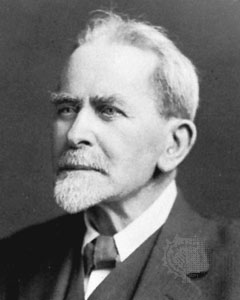
James George Frazer Scottish social anthropologist and folklorist (1854–1941)
Johanna Müller-Hermann Austrian composer and pedagogue (1868 - 1941)
Fritz Manteuffel German gymnast
Pavel Filonov Russian painter
Louis Chevrolet American racing driver (1878–1941)
C. R. M. F. Cruttwell British historian (1887–1941)

By month

Across the calendar of 1941

Step through

Adjacent years

Keep going

More to explore