Year retrospective · 1940s

1944

1944 (MCMXLIV) was a leap year starting on Saturday of the Gregorian calendar, the 1944th year of the Common Era (CE) and Anno Domini (AD) designations, the 944th year of the 2nd millennium, the 44th year of the 20th century, and the 5th year of the 1940s decade.

Recorded events

10

top entries

Notable births

30

Notable deaths

30

Decade

1940s

Timeline

Defining events of 1944

  1. 1944 World War II: Navigation errors lead to an accidental American bombing of the Swiss city of Schaffhausen.

    1939–1945 global conflict

    World War II, or the Second World War, was a global conflict between two coalitions: the Allies and the Axis powers. Nearly all of the world's countries participated. Tanks and aircraft played major roles, the latter enabling the strategic bombing of cities and delivery of the only nuclear weapons used in war.

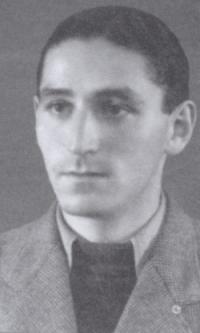
  2. 1944 Rudolf Vrba and Alfréd Wetzler escape from Birkenau death camp.

    Slovak-Jewish Auschwitz escapee, Canadian biochemist (1924–2006)

    Rudolf Vrba was a Slovak-Jewish biochemist who, as a teenager in 1942, was deported to the Auschwitz concentration camp in German-occupied Poland. He escaped from the camp in April 1944, at the height of the Holocaust, and co-wrote the Vrba-Wetzler report, a detailed report about the mass murder taking place there. The report, distributed by George Mantello in Switzerland, is credited with having halted the mass deportation of Hungary's Jews to Auschwitz in July 1944, saving more than 200,000 lives.

  3. 1944 World War II: Allied forces start bombing Belgrade, killing about 1,100 people. This bombing fell on the Orthodox Christian Easter.

    The Allied bombing of Yugoslavia in World War II involved air attacks on cities and towns in the Kingdom of Yugoslavia by the United States Army Air Force (USAAF) and Royal Air Force (RAF), including the Balkan Air Force (BAF), between 1941 and 1945, during which period the entire country was occupied by the Axis powers. Dozens of Yugoslav cities and towns were bombed, many repeatedly. These attacks included intensive air support for Yugoslav Partisan operations in May–June 1944, and a bombing campaign against transport infrastructure in September 1944 as the German Wehrmacht withdrew from Greece and Yugoslavia.

  4. 1944 Forces of the Communist-controlled Greek People's Liberation Army attack the smaller National and Social Liberation resistance group, which surrenders. Its leader Dimitrios Psarros is murdered.

    Militia in the Greek resistance against Axis occupation in WWII

    The Greek People's Liberation Army was the military arm of the left-wing National Liberation Front (EAM) during the period of the Greek resistance until February 1945, when, following the Dekemvriana clashes and the Varkiza Agreement, it was disarmed and disbanded. ELAS was the largest and most significant of the military organizations of the Greek resistance.

  5. 1944 World War II: The 1st Air Commando Group using Sikorsky R-4 helicopters stage the first use of helicopters in combat with combat search and rescue operations in the China Burma India Theater.

    1939–1945 global conflict

    World War II, or the Second World War, was a global conflict between two coalitions: the Allies and the Axis powers. Nearly all of the world's countries participated. Tanks and aircraft played major roles, the latter enabling the strategic bombing of cities and delivery of the only nuclear weapons used in war.

  6. 1944 World War II: In Greenland, the Allied Sledge Patrol attack the German Bassgeiger weather station.

    The fall of Denmark in April 1940 left the Danish colony of Greenland an unoccupied territory of an occupied nation, under the possibility of seizure by the United Kingdom, United States or Canada, a Dominion of the British Empire.

  7. 1944 World War II: Operation Persecution is initiated: Allied forces land in the Hollandia (currently known as Jayapura) area of New Guinea.
  8. 1944 World War II: The SBS launches a raid against the garrison of Santorini in Greece.
  9. 1944 The United Negro College Fund is incorporated.
  10. 1944 Georgios Papandreou becomes head of the Greek government-in-exile based in Egypt.

Arrivals

Born in 1944

Kathy Acker 1944– American novelist and playwright (1947–1997)
Philip Jackson 1944– Scottish sculptor (born 1944)
James Heckman 1944– American economist (born 1944)
Bernie Worrell 1944– American keyboardist and record producer (1944–2016)
Monty Alexander 1944– Jamaican pianist (born 1944)
Phillip Allen Sharp 1944– American geneticist and molecular biologist
Tommie Smith 1944– American track and field athlete (born 1944)
Marc Ouellet 1944– Canadian Catholic cardinal (born 1944)
Boz Scaggs 1944– American singer, songwriter and guitarist (born 1944)
Kathy Acker 1944– American novelist and playwright (1947–1997)
Philip Jackson 1944– Scottish sculptor (born 1944)
James Heckman 1944– American economist (born 1944)

Farewells

Died in 1944

Elmer Gedeon American baseball player (1917–1944)
Wassily Kandinsky Russian painter and art theorist (1866–1944)
E. M. Antoniadi Greek-French astronomer
Pehr Evind Svinhufvud Finnish politician (1861–1944)
Lina Cavalieri Italian operatic soprano (1874–1944)
Jean Giraudoux French novelist, essayist, diplomat and playwright (1882–1944)
Ida Tarbell American writer, journalist, biographer and lecturer (1857–1944)
Hendrik Willem van Loon Dutch-American historian, journalist and author
Edgar Zilsel Austrian historian and philosopher
Fredy Hirsch German-Jewish youth leader
Elmer Gedeon American baseball player (1917–1944)
Wassily Kandinsky Russian painter and art theorist (1866–1944)

By month

Across the calendar of 1944

Step through

Adjacent years

Keep going

More to explore