Calendar date · January

What happened on January 3

On January 3, 69: The Roman legions on the Rhine refuse to declare their allegiance to Galba, instead proclaiming their legate, Aulus Vitellius, as emperor.

Events

54

across history

Notable births

50

Notable deaths

50

Zodiac

Capricorn

People

Born on January 3

Carlos Baleba 2004– Cameroonian footballer (born 2004)
Toby Collyer 2004– English footballer (born 2004)
Habib Diarra 2004– Senegalese footballer (born 2004)
Kyle Rittenhouse 2003– American known for the Kenosha unrest shooting (born 2003)
Greta Thunberg 2003– Swedish activist (born 2003)
Alan Virginius 2003– French footballer (born 2003)
Nico González 2002– Spanish footballer
Deni Avdija 2001– Israeli basketball player (born 2001)
Leandro Barreiro 2000– Luxembourgish footballer (born 2000)
Show 9 more — notable births on January 3
João Mário 2000– Portuguese footballer
Patrick Cutrone 1998– Italian footballer (born 1998)
Emiru 1998– American streamer and cosplayer (born 1998)
Fodé Ballo-Touré 1997– Footballer (born 1997)
Jérémie Boga 1997– Ivorian-French footballer (born 1997)
Kyron McMaster 1997– British Virgin Islands athlete (born 1997)
Léo Ortiz 1996– Brazilian footballer
Florence Pugh 1996– English actress (born 1996)
Rondae Hollis-Jefferson 1995– American basketball player (born 1995)

People

Died on January 3

Jeff Baena American screenwriter and film director (1977–2025)
Brenton Wood American singer and songwriter (1941–2025)
Niko Lekishvili Georgian politician (1947–2025)
Elena Huelva Spanish influencer and writer (2002–2023)
Eric Jerome Dickey American author (1961–2021)
Qasem Soleimani Iranian military officer (1957–2020)
Herb Kelleher American airline businessman (1931–2019)
Colin Brumby Australian composer and conductor
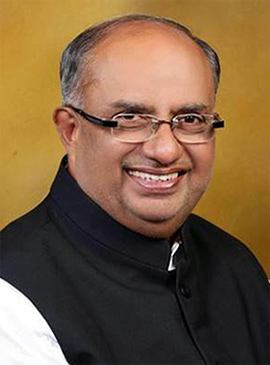
H. S. Mahadeva Prasad Indian politician
Show 9 more — notable deaths on January 3
Paul Bley Canadian jazz pianist (1932–2016)
Peter Naur Danish computer science pioneer
Bill Plager Canadian ice hockey player
Igor Sergun Russian military officer (1957–2016)
Martin Anderson American academic, economist, and policy analyst
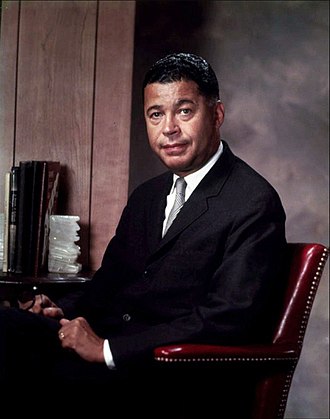
Edward Brooke American politician (1919–2015)
Phil Everly American singer-songwriter (1939–2014)
George Goodman American author, broadcaster (1930–2014)
Saul Zaentz American record company executive and film producer (1921–2014)

Timeline

Every January 3 on record

  1. 69 The Roman legions on the Rhine refuse to declare their allegiance to Galba, instead proclaiming their legate, Aulus Vitellius, as emperor.

    Calendar year

    AD 69 (LXIX) was a common year starting on Sunday of the Julian calendar. In the Roman Empire, it was known as the Year of the consulship of Galba and Vinius. The denomination AD 69 for this year has been used since the early medieval period, when the Anno Domini calendar era became the prevalent method in Europe for naming years.

  2. 250 Emperor Decius orders everyone in the Roman Empire (except Jews) to make sacrifices to the Roman gods.

    Roman emperor from 249 to 251

    Gaius Messius Quintus Trajanus Decius, known as Trajan Decius or simply Decius, was Roman emperor from 249 to 251.

  3. 1521 Pope Leo X excommunicates Martin Luther in the papal bull Decet Romanum Pontificem.

    Head of the Catholic Church from 1513 to 1521

    Pope Leo X was head of the Catholic Church and ruler of the Papal States from 9 March 1513 to his death in December 1521.

  4. 1653 By the Coonan Cross Oath, the Eastern Church in India cuts itself off from colonial Portuguese tutelage.

    1653 oath by members of the Saint Thomas Christians

    The Coonan Cross Oath, also known as the Great Oath of Bent Cross or Leaning Cross Oath, was taken on 3 January 1653 in Mattancherry by a significant portion of the Saint Thomas Christian community in the Malabar region of India. This public declaration marked their refusal to submit to the authority of the Jesuits and the Latin Catholic hierarchy, as well as their rejection of Portuguese dominance in both ecclesiastical and secular matters.

  5. 1749 Benning Wentworth issues the first of the New Hampshire Grants, leading to the establishment of Vermont.

    American merchant and colonial administrator (1696–1770)

    Benning Wentworth was an American merchant, landowner and colonial administrator who served as the governor of New Hampshire from 1741 to 1766. He is best known for issuing a series of land grants between 1749 and 1766 in territory disputed with the Province of New York. Born in Portsmouth, New Hampshire into a prominent local family, Wentworth was groomed by his father John to take over the family business before Wentworth's misbehavior at Harvard College led him to be sent by his father to Boston to undergo an apprenticeship at his uncle's counting house.

  6. 1749 The first issue of Berlingske, Denmark's oldest continually operating newspaper, is published.
  7. 1777 American Revolutionary War: American forces under General George Washington defeat British forces at the Battle of Princeton, helping boost patriot morale.
  8. 1815 Austria, the United Kingdom, and France form a secret defensive alliance against Prussia and Russia.
  9. 1833 Captain James Onslow, in the Clio, reasserts British sovereignty over the Falkland Islands.
  10. 1848 Joseph Jenkins Roberts is sworn in as the first president of Liberia.
  11. 1861 American Civil War: Delaware votes not to secede from the United States.
  12. 1868 Meiji Restoration in Japan: The Tokugawa shogunate is abolished; agents of Satsuma and Chōshū seize power.
  13. 1870 Construction work begins on the Brooklyn Bridge in New York, United States.
  14. 1871 In the Battle of Bapaume, an engagement in the Franco-Prussian War, General Louis Faidherbe's forces bring about a Prussian retreat.
  15. 1885 Sino-French War: Beginning of the Battle of Núi Bop.
Show 15 earlier entries from January 3
  1. 1911 A magnitude 7.7 earthquake destroys the city of Almaty in Russian Turkestan.
  2. 1911 A gun battle in the East End of London leaves two dead. It sparked a political row over the involvement of then-Home Secretary Winston Churchill.
  3. 1913 An Atlantic coast storm sets the lowest confirmed barometric pressure reading (955.0 mb (28.20 inHg)) for a non-tropical system in the continental United States.
  4. 1913 First Balkan War: Greece completes its capture of the eastern Aegean island of Chios, as the last Ottoman forces on the island surrender.
  5. 1920 Over 640 are killed after a magnitude 6.4 earthquake strikes the Mexican states Puebla and Veracruz.
  6. 1933 Minnie D. Craig becomes the first woman elected as Speaker of the North Dakota House of Representatives, the first woman to hold a Speaker position anywhere in the United States.
  7. 1944 World War II: US flying ace Major Greg "Pappy" Boyington is shot down in his Vought F4U Corsair by Captain Masajiro Kawato flying a Mitsubishi A6M Zero.
  8. 1946 Popular Canadian American jockey George Woolf suffers a concussion during a freak racing accident; he dies from the injury the following day. The annual George Woolf Memorial Jockey Award is created to honor him.
  9. 1947 Proceedings of the U.S. Congress are televised for the first time.
  10. 1949 The Bangko Sentral ng Pilipinas, the central bank of the Philippines, is established.
  11. 1953 Frances P. Bolton and her son, Oliver from Ohio, become the first mother and son to serve simultaneously in the U.S. Congress.
  12. 1956 A fire damages the top part of the Eiffel Tower.
  13. 1957 The Hamilton Watch Company introduces the first electric watch.
  14. 1958 The West Indies Federation is formed.
  15. 1959 Alaska is admitted as the 49th U.S. state.

Around the world

Holidays on January 3

Keep going

More to explore