Calendar date · August

What happened on August 7

On August 7, 461: Roman Emperor Majorian is beheaded near the river Iria in north-west Italy following his arrest and deposition by the magister militum Ricimer.

Events

51

across history

Notable births

50

Notable deaths

50

Zodiac

Leo

People

Born on August 7

Lauren Hemp 2000– English footballer (born 2000)
Sydney McLaughlin-Levrone 1999– American hurdler and sprinter (born 1999)
Vladimir Barbu 1998– Italian diver (born 1998)
María Belén Bazo 1998– Peruvian windsurfer (born 1998)
Jalen Hurts 1998– American football player (born 1998)
Matty Cash 1997– Footballer (born 1997)
Kyler Murray 1997– American football player (born 1997)
Dani Ceballos 1996– Spanish footballer (born 1996)
Martti Nõmme 1993– Estonian ski jumper
Show 9 more — notable births on August 7
Karol Zalewski 1993– Polish sprinter (born 1993)
Adam Yates 1992– English racing cyclist
Simon Yates 1992– British road and track racing cyclist
Wout Weghorst 1992– Dutch footballer (born 1992)
Luis Salom 1991– Spanish motorcycle racer
Mike Trout 1991– American baseball player (born 1991)
Mitchell te Vrede 1991– Surinamese footballer
Jake Allen 1990– Canadian ice hockey player (born 1990)
Josh Franceschi 1990– English singer-songwriter

People

Died on August 7

Myint Swe Acting President of Myanmar (2018; 2021–2025)
Jon McBride American astronaut (1943–2024)
William Friedkin American director and producer (1935–2023)
David McCullough American historian and author (1933–2022)
Markie Post American actress (1950–2021)
Trevor Moore American comedian and actor (1980–2021)
David Berman American musician, singer, and poet (1967–2019)
M. Karunanidhi Indian writer and politician (1924–2018)
Stan Mikita Slovak-Canadian ice hockey player (1940–2018)
Show 9 more — notable deaths on August 7
Don Baylor American baseball player and manager (1949–2017)
David Maslanka American composer (1943–2017)
Bryan Clauson American racing driver (1989–2016)
Manuel Contreras Chilean general (1929–2015)
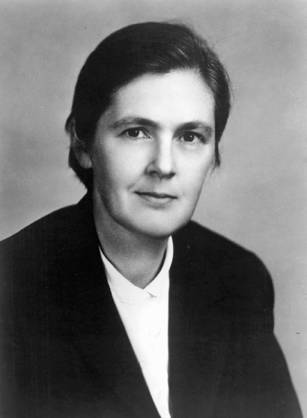
Frances Oldham Kelsey Canadian-American physician and pharmacologist (1914–2015)
Louise Suggs American professional golfer (1923–2015)
Víctor Fayad Argentine politician (1955–2014)
Perry Moss American football player, coach, and executive (1926–2014)
Henry Stone American record company executive (1921–2014)

Timeline

Every August 7 on record

  1. 461 Roman Emperor Majorian is beheaded near the river Iria in north-west Italy following his arrest and deposition by the magister militum Ricimer.

    Western Roman emperor from 457 to 461

    Majorian was Western Roman emperor from 457 to 461. A prominent commander in the Western military, Majorian deposed Avitus in 457 with the aid of his ally Ricimer at the Battle of Placentia. Possessing little more than Italy and Dalmatia, as well as some territory in Hispania and northern Gaul, Majorian campaigned vigorously for three years against the Empire's enemies.

  2. 626 The Avar and Slav armies leave the siege of Constantinople.

    Alliance of various Eurasian nomads – 6th to 9th centuries

    The Pannonian Avars or Carpathian Avars were an alliance of several groups of Eurasian nomads of various origins. The peoples were also known as the Obri in the chronicles of the Rus, the Abaroi or Varchonitai, or Pseudo-Avars in Byzantine sources, and the Apar to the Göktürks. They established the Avar Khaganate, which spanned the Pannonian Basin and considerable areas of Central and Eastern Europe from the late-6th to the early-9th centuries.

  3. 768 Pope Stephen III is elected to office, and quickly seeks Frankish protection against the Lombard threat, since the Byzantine Empire is no longer able to help.

    Head of the Catholic Church from 768 to 772

    Pope Stephen III was the bishop of Rome and ruler of the Papal States from 7 August 768 to his death on 24 January 772. Stephen was a Benedictine monk who worked in the Lateran Palace during the reign of Pope Zachary. In the midst of a tumultuous contest by rival factions to name a successor to Pope Paul I, Stephen was elected with the support of the Roman officials.

  4. 936 Coronation of King Otto I of Germany.

    Holy Roman Emperor from 962 to 973

    Otto I, known as Otto the Great or Otto of Saxony, was East Frankish (German) king from 936 and Holy Roman Emperor from 962 until his death in 973. He was the eldest son of Henry the Fowler and Matilda of Ringelheim.

  5. 1461 The Ming dynasty Chinese military general Cao Qin stages a coup against the Tianshun Emperor.

    Imperial dynasty of China (1368–1644)

    The Ming dynasty, officially the Great Ming, was an imperial dynasty of China that ruled from 1368 to 1644, following the collapse of the Mongol-led Yuan dynasty. The Ming was the last imperial dynasty of China ruled by the Han people, the majority ethnic group in China. Although the primary capital of Beijing fell in 1644 to a rebellion led by Li Zicheng, numerous rump regimes ruled by remnants of the Ming imperial family, collectively called the Southern Ming, survived until 1662.

  6. 1479 Battle of Guinegate: French troops of King Louis XI were defeated by the Burgundians led by Archduke Maximilian of Habsburg.
  7. 1679 The brigantine Le Griffon becomes the first ship to sail the upper Great Lakes of North America.
  8. 1714 The Battle of Gangut: The first important victory of the Russian Navy.
  9. 1743 The Treaty of Åbo ended the 1741–1743 Russo-Swedish War.
  10. 1782 George Washington orders the creation of the Badge of Military Merit to honor soldiers wounded in battle. It is later renamed to the more poetic Purple Heart.
  11. 1786 The first federal Indian Reservation is created by the United States.
  12. 1789 The United States Department of War is established.
  13. 1791 American troops destroy the Miami town of Kenapacomaqua near the site of present-day Logansport, Indiana in the Northwest Indian War.
  14. 1794 U.S. President George Washington invokes the Militia Acts of 1792 to suppress the Whiskey Rebellion in western Pennsylvania.
  15. 1819 Simón Bolívar triumphs over Spain in the Battle of Boyacá.
Show 15 earlier entries from August 7
  1. 1858 The first Australian rules football match is played between Melbourne Grammar and Scotch College.
  2. 1890 Anna Månsdotter, found guilty of the 1889 Yngsjö murder, became the last woman to be executed in Sweden.[better source needed]
  3. 1909 Alice Huyler Ramsey and three friends become the first women to complete a transcontinental auto trip, taking 59 days to travel from New York, New York to San Francisco, California.
  4. 1926 The first British Grand Prix was held at Brooklands.
  5. 1927 The Peace Bridge opens between Fort Erie, Ontario and Buffalo, New York.
  6. 1930 The last confirmed lynching of black people in the Northern United States occurs in Marion, Indiana; two men, Thomas Shipp and Abram Smith, are murdered.
  7. 1933 The Kingdom of Iraq slaughters over 3,000 Assyrians in the village of Simele. This date is recognized as Martyrs Day or National Day of Mourning by the Assyrian community in memory of the Simele massacre.
  8. 1942 World War II: The Battle of Guadalcanal begins as the United States Marines initiate the first American offensive of the war with landings on Guadalcanal and Tulagi in the Solomon Islands.
  9. 1944 IBM dedicates the first program-controlled calculator, the Automatic Sequence Controlled Calculator (known best as the Harvard Mark I).
  10. 1946 The government of the Soviet Union presented a note to its Turkish counterparts which refuted the latter's sovereignty over the Turkish Straits, thus beginning the Turkish Straits crisis.
  11. 1947 Thor Heyerdahl's balsa wood raft, the Kon-Tiki, smashes into the reef at Raroia in the Tuamotu Islands after a 101-day, 7,000 kilometres (4,300 mi) journey across the Pacific Ocean in an attempt to prove that pre-historic peoples could have traveled from South America.
  12. 1947 The Bombay Municipal Corporation formally takes over the Bombay Electric Supply and Transport (BEST).
  13. 1959 Explorer program: Explorer 6 launches from the Atlantic Missile Range in Cape Canaveral, Florida.
  14. 1960 Ivory Coast becomes independent from France.
  15. 1962 Canadian-born American pharmacologist Frances Oldham Kelsey is awarded the U.S. President's Award for Distinguished Federal Civilian Service for her refusal to authorize thalidomide.

Around the world

Holidays on August 7

Keep going

More to explore