Calendar date · April

What happened on April 13

On April 13, 989: The death of Bardas Phokas the Younger in the battle of Abydos ends his second rebellion against Byzantine Emperor Basil II.

Events

45

across history

Notable births

50

Notable deaths

50

Zodiac

Aries

People

Born on April 13

Karl Hein 2002– Estonian footballer
Neco Williams 2001– Welsh footballer (born 2001)
Rasmus Dahlin 2000– Swedish ice hockey player (born 2000)
Facundo Torres 2000– Uruguayan footballer (born 2000)
Alessandro Bastoni 1999– Italian footballer (born 1999)
András Schäfer 1999– Hungarian footballer (born 1999)
Mateo Cassierra 1997– Colombian footballer (born 1997)
Kyle Walker-Peters 1997– English footballer (born 1997)
Marko Grujić 1996– Serbian footballer (born 1996)
Show 9 more — notable births on April 13
Kahraba 1994– Egyptian footballer (born 1994)
Melvin Gordon 1993– American football player (born 1993)
Darrun Hilliard 1993– American basketball player (born 1993)
Jordan Silk 1992– Australian cricketer
Josh Gordon 1991– American football player (born 1991)
Josh Reynolds 1989– Australian rugby league footballer
Allison Williams 1988– American actress (born 1988)
Anderson 1988– Brazilian footballer (born 1988)
Steven De Vuyst 1987– Belgian politician (born 1987)

People

Died on April 13

Moya Brennan Irish folk singer, songwriter and harpist (1952–2026)
Dave McGinnis American football player, coach and sportscaster (1951–2026)
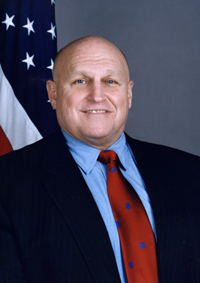
Richard Armitage American diplomat and government official (1945–2025)
Mario Vargas Llosa Peruvian novelist and writer (1936–2025)
Jean Marsh English actress (1934–2025)
Faith Ringgold American artist (1930–2024)
Michel Bouquet French actor (1925–2022)
Gloria Parker American musician and bandleader (1921–2022)
Art Bell American broadcaster and author (1945–2018)
Show 9 more — notable deaths on April 13
Dan Rooney American football executive/owner, philanthropist and diplomat (1932–2017)
Eduardo Galeano Uruguayan writer and journalist (1940–2015)
Günter Grass German author and artist (1927–2015)
Herb Trimpe American comics creator (1939–2015)
Ernesto Laclau Argentine philosopher and political theorist
Michael Ruppert American writer and investigative journalist
Stephen Dodgson British composer and broadcaster (1924–2013)
Cecil Chaudhry Pakistani fighter pilot, academic and activist
Shūichi Higurashi Japanese manga artist

Timeline

Every April 13 on record

  1. 989 The death of Bardas Phokas the Younger in the battle of Abydos ends his second rebellion against Byzantine Emperor Basil II.

    10th-century Byzantine general

    Bardas Phokas was a Byzantine general who took a conspicuous part in three revolts for and against the ruling Macedonian dynasty.

  2. 1055 Election of Pope Victor II following the death of Pope Leo IX in the previous year.

    Head of the Catholic Church from 1055 to 1057

    Pope Victor II, born Gebhard von Dollnstein-Hirschberg, was the head of the Catholic Church and ruler of the Papal States from 13 April 1055 until his death in 1057. Victor II was one of a series of German-born popes who led the Gregorian Reform.

  3. 1111 Henry V, King of Germany, is crowned Holy Roman Emperor by pope Paschal II.

    Holy Roman Emperor from 1111 to 1125

    Henry V was King of Germany and Holy Roman Emperor, as the fourth and last ruler of the Salian dynasty. He was made co-ruler by his father, Henry IV, in 1098.

  4. 1175 Saladin routs his Muslim opponents, the Zengids, in the battle of the Horns of Hama, consolidating his control over Syria except for Aleppo.

    Founder of the Ayyubid dynasty (c. 1137–1193)

    Salah ad-Din Yusuf ibn Ayyub, commonly known as Saladin, was a Kurdish commander and political leader. He was the founder of the Ayyubid dynasty and the first sultan of both Egypt and Syria. An important figure of the Third Crusade, he spearheaded the Muslim military effort against the Crusader states in the Levant.

  5. 1204 Constantinople falls to the Crusaders of the Fourth Crusade, temporarily ending the Byzantine Empire.

    Capital of the Eastern Roman and Ottoman empires

    Constantinople was a historical city located on a peninsula at the southeastern tip of Thrace in Europe; with the Bosporus strait and the ancient cities of Chalcedon and Chrysopolis in Bithynia, Anatolia to the east; the Golden Horn and the citadel of Galata (Pera) to the north; the Sea of Marmara to the south; and the Princes' Islands to the southeast. Constantinople served as the capital of the Roman, Byzantine, Latin, and Ottoman Empires between its consecration in 330 and the formal abolition of the Ottoman sultanate in 1922.

  6. 1455 Thirteen Years' War: the beginning of the Battle for Kneiphof.
  7. 1612 Samurai Miyamoto Musashi defeats Sasaki Kojirō in a duel at Funajima island.
  8. 1613 Samuel Argall, having captured Pocahontas in Passapatanzy, Virginia, sets off with her to Jamestown with the intention of exchanging her for English prisoners held by her father.
  9. 1699 The Sikh religion is formalised as the Khalsa – the brotherhood of Warrior-Saints – by Guru Gobind Singh in northern India, in accordance with the Nanakshahi calendar.
  10. 1742 George Frideric Handel's oratorio Messiah makes its world premiere in Dublin, Ireland.
  11. 1777 American Revolutionary War: American forces are ambushed and defeated in the Battle of Bound Brook, New Jersey.
  12. 1829 The Roman Catholic Relief Act 1829 gives Roman Catholics in the United Kingdom the right to vote and to sit in Parliament.
  13. 1849 Lajos Kossuth presents the Hungarian Declaration of Independence in a closed session of the National Assembly.
  14. 1861 American Civil War: Union forces surrender Fort Sumter to Confederate forces.
  15. 1865 American Civil War: Raleigh, North Carolina is occupied by Union forces.
Show 15 earlier entries from April 13
  1. 1870 The New York City Metropolitan Museum of Art is founded.
  2. 1873 The Colfax massacre: More than 60 to 150 black men are murdered in Colfax, Louisiana, while surrendering to a mob of former Confederate soldiers and members of the Ku Klux Klan.
  3. 1909 The 31 March Incident leads to the overthrow of Sultan Abdul Hamid II.
  4. 1919 Jallianwala Bagh massacre: British Indian Army troops led by Brigadier-General Reginald Dyer kill approximately 379–1,000 unarmed demonstrators including men and women in Amritsar, India. Approximately 1,500 are injured.
  5. 1924 A.E.K., a major Greek multi-sport club, is established in Athens by Greek refugees from Constantinople.
  6. 1941 A pact of neutrality between the USSR and Japan is signed.
  7. 1943 World War II: The discovery of mass graves of Polish prisoners of war killed by Soviet forces in the Katyń Forest Massacre is announced, causing a diplomatic rift between the Polish government-in-exile in London and the Soviet Union, which denies responsibility.
  8. 1943 The Jefferson Memorial is dedicated in Washington, D.C., on the 200th anniversary of President Thomas Jefferson's birth.
  9. 1945 World War II: German troops kill more than 1,000 political and military prisoners in Gardelegen, Germany.
  10. 1945 World War II: Soviet and Bulgarian forces capture Vienna.
  11. 1948 In an ambush, 78 Jewish doctors, nurses and medical students from Hadassah Hospital, and a British soldier, are massacred by Arabs in Sheikh Jarrah. This event came to be known as the Hadassah medical convoy massacre.
  12. 1953 CIA director Allen Dulles launches the mind-control program Project MKUltra.
  13. 1960 The United States launches Transit 1-B, the world's first satellite navigation system.
  14. 1964 At the Academy Awards, Sidney Poitier becomes the first African-American man to win the Best Actor award for the 1963 film Lilies of the Field.
  15. 1970 At 10:08 PM EST an oxygen tank aboard the Apollo 13 Service Module explodes, putting the crew in great danger and causing major damage to the Apollo command and service module (codenamed "Odyssey") while en route to the Moon.

Around the world

Holidays on April 13

Keep going

More to explore