Year retrospective · 1930s

1937

1937 (MCMXXXVII) was a common year starting on Friday of the Gregorian calendar, the 1937th year of the Common Era (CE) and Anno Domini (AD) designations, the 937th year of the 2nd millennium, the 37th year of the 20th century, and the 8th year of the 1930s decade.

Recorded events

10

top entries

Notable births

12

Notable deaths

30

Decade

1930s

Timeline

Defining events of 1937

  1. 1937 Aden becomes a British crown colony.

    Temporary capital of Yemen

    Aden is an ancient port city in the southern part of the Arabian peninsula, on the north coast of the Gulf of Aden, positioned near the eastern approach to the Red Sea, and has been the de facto capital of Yemen since 2014. It is approximately 170 km (110 mi) east of the Bab-el-Mandeb strait. With its strategic location on the coastline, Aden serves as a gateway between the Red Sea and the Arabian Sea, making it a crucial maritime hub connecting Africa, Asia, and the Middle East.

  2. 1937 The Royal New Zealand Air Force is formed as an independent service.

    Air force component of the New Zealand Defence Force

    The Royal New Zealand Air Force is the aerial service branch of the New Zealand Defence Force. It was formed initially in 1923 as a branch of the New Zealand Army, being known as the New Zealand Permanent Air Force, becoming an independent air force on 1 April 1937.

  3. 1937 Sir Frank Whittle ground-tests the first jet engine designed to power an aircraft, at Rugby, England.

    British Royal Air Force engineer and air officer (1907–1996)

    Air Commodore Sir Frank Whittle was an English engineer, inventor and Royal Air Force (RAF) air officer. He is credited with co-creating the turbojet engine. A patent was submitted by Maxime Guillaume in 1921 for a similar invention which was technically unfeasible at the time.

  4. 1937 Spanish Civil War: Guernica, Spain, is bombed by the German Condor Legion and the Italian Aviazione Legionaria.

    1936–1939 civil war in Spain

    The Spanish Civil War was fought from 1936 to 1939 between the Republicans and the Nationalist rebels. Republicans were loyal to the left-leaning Popular Front government of the Second Spanish Republic and included socialists, anarchists, communists, and separatists, supported by the Soviet Union. The opposing Nationalists were an alliance of fascist Falangists, monarchists, conservatives, and traditionalists, supported by Nazi Germany and Fascist Italy and initially led by a military junta, until General Francisco Franco was appointed supreme leader on 1 October 1936 for what he called the Spanish State.

  5. 1937 South African medical researcher Max Theiler develops the yellow fever vaccine at the Rockefeller Foundation in New York City.

    Country in Southern Africa

    South Africa, officially the Republic of South Africa (RSA), is the southernmost country in Africa. Its nine provinces are bounded to the south by 2,798 kilometres of coastline that stretches along the South Atlantic and Indian Ocean; to the north by the neighbouring countries of Namibia, Botswana, and Zimbabwe; to the east and northeast by Mozambique and Eswatini; and it encloses Lesotho. Covering an area of 1,221,037 square kilometres, the country has a population of over 63 million people, making it the sixth-most populated country in Africa.

  6. 1937 The Commonwealth of the Philippines holds a plebiscite for Filipino women on whether they should be extended the right to suffrage; over 90% would vote in the affirmative.

    U.S. unincorporated territory in southeast Asia from 1935 to 1946

    The Commonwealth of the Philippines was an unincorporated territory and commonwealth (dependency) of the United States that existed from 1935 to 1946. It was established following the Tydings–McDuffie Act to replace the Insular Government of the Philippine Islands and was designed as a transitional administration in preparation for full Philippine independence. Its foreign affairs remained managed by the United States.

  7. 1937 The Kamikaze arrives at Croydon Airport in London. It is the first Japanese-built aircraft to fly to Europe.
  8. 1937 Josip Broz Tito reads the resolution "Manifesto of constitutional congress of KPH" to the constitutive congress of KPH (Croatian Communist Party) in woods near Samobor.
  9. 1937 Spanish Civil War: The Regional Defence Council of Aragon is dissolved by the Second Spanish Republic.
  10. 1937 Second Sino-Japanese War: The Battle of Shanghai begins.

Arrivals

Born in 1937

Antonio Carluccio 1937– Italian chef and restaurateur (1937–2017)
Joseph Estrada 1937– President of the Philippines from 1998 to 2001
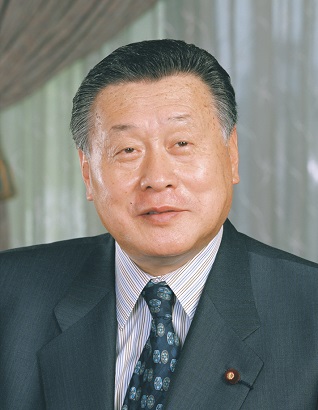
Yoshiro Mori 1937– Prime Minister of Japan from 2000 to 2001
Antonio Carluccio 1937– Italian chef and restaurateur (1937–2017)
Joseph Estrada 1937– President of the Philippines from 1998 to 2001
Yoshiro Mori 1937– Prime Minister of Japan from 2000 to 2001
Antonio Carluccio 1937– Italian chef and restaurateur (1937–2017)
Joseph Estrada 1937– President of the Philippines from 1998 to 2001
Yoshiro Mori 1937– Prime Minister of Japan from 2000 to 2001
Antonio Carluccio 1937– Italian chef and restaurateur (1937–2017)
Joseph Estrada 1937– President of the Philippines from 1998 to 2001
Yoshiro Mori 1937– Prime Minister of Japan from 2000 to 2001

Farewells

Died in 1937

Martin Conway British politician
William Morton Wheeler U.S. entomologist, myrmecologist and Harvard professor (1865–1937)
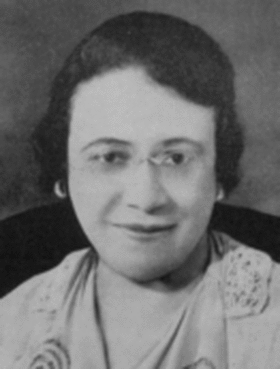
Violette Neatley Anderson American lawyer (1882–1937)
Ted Healy American vaudeville performer, comedian, and actor (1896–1937)
Frank B. Kellogg American lawyer and statesman (1856–1937)
William Propsting Australian politician
Elihu Root American politician, statesman, and Nobel Laureate (1845–1937)
Julius Meier 20th Governor of Oregon
Jean Harlow American actress (1911–1937)
Yevgeny Zamyatin Russian author (1884–1937)
Joseph S. Cullinan American oil executive (1860–1937)
Lars Edvard Phragmén Swedish mathematician (1863–1937)

By month

Across the calendar of 1937

Step through

Adjacent years

Keep going

More to explore