Calendar date · May

What happened on May 5

On May 5, 553: The Second Council of Constantinople begins.

Events

51

across history

Notable births

50

Notable deaths

50

Zodiac

Taurus

People

Born on May 5

Jenna Davis 2004– American actress and singer (born 2004)
Kirsty Muir 2004– Scottish freestyle skier (born 2004)
Carlos Alcaraz 2003– Spanish tennis player (born 2003)
Nathan Chen 1999– American figure skater (born 1999)
Justin Kluivert 1999– Dutch footballer (born 1999)
Aryna Sabalenka 1998– Belarusian tennis player (born 1998)
Logan Gilbert 1997– American baseball player (born 1997)
Mitch Marner 1997– Canadian ice hockey player (born 1997)
Christopher Eubanks 1996– American professional tennis player (born 1996)
Show 9 more — notable births on May 5
Mayar Sherif 1996– Egyptian tennis player (born 1996)
James Conner 1995– American football player (born 1995)
Celeste 1994– British singer (born 1994)
Raúl Jiménez 1991– Mexican footballer (born 1991)
Tatiana Schlossberg 1990– American journalist and author (1990–2025)
Agnes Knochenhauer 1989– Swedish curler (born 1989)
Adele 1988– English singer-songwriter (born 1988)
Mervyn Westfield 1988– English cricketer
Graham Dorrans 1987– Scottish footballer (born 1987)

People

Died on May 5

Chris Phelan Australian rugby league player (1955–2026)
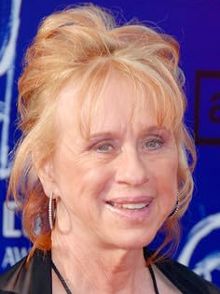
Jeannie Epper American stuntwoman and actress (1941–2024)
Bernard Hill English actor (1944–2024)
César Luis Menotti Argentine footballer and manager (1938–2024)
Millie Small Jamaican singer (1947–2020)
Binyamin Elon Israeli rabbi and politician (1954–2017)
Ely Ould Mohamed Vall Head of State of Mauritania from 2005 to 2007
Jobst Brandt American bicycle racer (1935–2015)
Hans Jansen Dutch academic (1942–2015)
Show 9 more — notable deaths on May 5
Michael Otedola Nigerian politician (1926–2014)
Sarah Kirsch German poet
Robert Ressler FBI criminal profiler (1937–2013)
Surendranath Indian cricketer (born 1937)
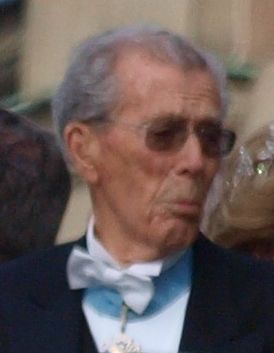
Carl Johan Bernadotte Prince Bernadotte
Aatos Erkko Finnish newspaper editor and publisher
George Knobel Dutch football manager (1922–2012)
Roy Padayachie South African politician and activist (1950–2012)
Claude Choules Long-living combat veteran of WWI

Timeline

Every May 5 on record

  1. 553 The Second Council of Constantinople begins.

    Ecumenical council held in 553 in response to the Three Chapters controversy

    The Second Council of Constantinople is the fifth of the first seven ecumenical councils recognized by both the Eastern Orthodox Church and the Catholic Church. It is also recognized by the Old Catholics and others. Protestant opinions and recognition of it are varied.

  2. 1192 Queen Isabella I of Jerusalem marries Henry II, Count of Champagne.

    Queen of Jerusalem (r. 1190/1192–1205)

    Isabella I was the queen of Jerusalem who reigned from the early 1190s to her death. She received the homage of her vassals as the rightful heir to the throne after the death of her half-sister Queen Sibylla in 1190, but Sibylla's widower, Guy of Lusignan, held onto the kingdom until 1192. Isabella became queen upon her coronation in 1198.

  3. 1215 Rebel barons renounce their allegiance to King John of England — part of a chain of events leading to the signing of the Magna Carta.

    King of England from 1199 to 1216

    John was King of England from 1199 until his death in 1216. He lost the Duchy of Normandy and most of his other French lands to King Philip II of France, resulting in the collapse of the Angevin Empire and contributing to the subsequent growth in power of the French Capetian dynasty during the 13th century. The baronial revolt at the end of John's reign led to the sealing of Magna Carta, a document considered a foundational milestone in English and later British constitutional history.

  4. 1260 Kublai Khan becomes ruler of the Mongol Empire.

    Emperor of Yuan China from 1271 to 1294

    Kublai Khan, also known by his temple name as the Emperor Shizu of Yuan and his regnal name Setsen Khan, was the founder and first emperor of the Mongol-led Yuan dynasty of China. He proclaimed the dynastic name "Great Yuan" in 1271, and ruled Yuan China until his death in 1294.

  5. 1292 Election of Count Adolf of Nassau as King of the Romans in the Dominican monastery of Frankfurt.

    King of Germany from 1292 to 1298

    Adolf was the count of Nassau from about 1276 and the elected king of Germany from 1292 until his deposition by the prince-electors in 1298. He was never crowned by the pope, which would have secured him the imperial title. He was the first physically and mentally healthy ruler of the Holy Roman Empire ever to be deposed without a papal excommunication.

  6. 1494 On his second voyage to the New World, Christopher Columbus sights Jamaica, landing at Discovery Bay and declares Jamaica the property of the Spanish crown.
  7. 1609 Daimyō (Lord) Shimazu Tadatsune of the Satsuma Domain in southern Kyūshū, Japan, completes his successful invasion of the Ryūkyū Kingdom in Okinawa.
  8. 1640 King Charles I of England dissolves the Short Parliament.
  9. 1654 Cromwell's Act of Grace, aimed at reconciliation with the Scots, proclaimed in Edinburgh.
  10. 1762 Russia and Prussia sign the Treaty of St. Petersburg.
  11. 1789 In France, the Estates-General convenes for the first time since 1614.
  12. 1809 Mary Kies becomes the first woman awarded a U.S. patent, for a technique of weaving straw with silk and thread.
  13. 1821 Emperor Napoleon dies in exile on the island of Saint Helena in the South Atlantic Ocean.
  14. 1821 The first edition of The Manchester Guardian, now The Guardian, is published.
  15. 1835 The first railway in continental Europe opens between Brussels and Mechelen.
Show 15 earlier entries from May 5
  1. 1862 Cinco de Mayo: Troops led by Ignacio Zaragoza halt a French invasion in the Battle of Puebla in Mexico.
  2. 1864 American Civil War: The Battle of the Wilderness begins in Spotsylvania County.
  3. 1865 American Civil War: The Confederate government is declared dissolved at Washington, Georgia.
  4. 1866 Memorial Day first celebrated in United States at Waterloo, New York.
  5. 1877 American Indian Wars: Sitting Bull leads his band of Lakota into Canada to avoid harassment by the United States Army under Colonel Nelson Miles.
  6. 1886 Workers marching for the eight-hour day in Milwaukee, Wisconsin, are shot at by Wisconsin National Guardsmen in what became known as the Bay View Massacre.
  7. 1887 The Peruvian Academy of Language is founded.
  8. 1891 The Music Hall in New York City (later known as Carnegie Hall) has its grand opening and first public performance, with Tchaikovsky as the guest conductor.
  9. 1904 Pitching against the Philadelphia Athletics at the Huntington Avenue Grounds, Cy Young of the Boston Americans throws the first perfect game in the modern era of baseball.
  10. 1905 The trial in the Stratton Brothers case begins in London, England; it marks the first time that fingerprint evidence is used to gain a conviction for murder.
  11. 1912 The first issue of the Bolshevik newspaper Pravda is published.
  12. 1920 Authorities arrest Nicola Sacco and Bartolomeo Vanzetti for alleged robbery and murder.
  13. 1930 The 1930 Bago earthquake, the first of two major earthquakes in southern Burma, kills as many as 7,000 in Yangon and Bago.
  14. 1936 Italian troops occupy Addis Ababa, Ethiopia.
  15. 1940 World War II: Norwegian campaign: Norwegian squads in Hegra Fortress and Vinjesvingen capitulate to German forces after all other Norwegian forces in southern Norway had laid down their arms.

Around the world

Holidays on May 5

Keep going
More to explore