Calendar date · January

What happened on January 7

On January 7, -49: The Senate of Rome says that Caesar will be declared a public enemy unless he disbands his army, prompting the tribunes who support him to flee to where Caesar is waiting in Ravenna.

Events

47

across history

Notable births

50

Notable deaths

50

Zodiac

Capricorn

People

Born on January 7

Blue Ivy Carter 2012– American singer (born 2012)
Chloe Chua 2007– Singaporean violinist (born 2007)
Ryan Dunn 2003– American basketball player (born 2003)
Marcus Scribner 2000– American actor (born 2000)
Ozzie Albies 1997– Curaçaoan baseball player (born 1997)
Lamar Jackson 1997– American football player (born 1997)
Alex Nedeljkovic 1996– American ice hockey player (born 1996)
Jordan Bell 1995– American basketball player (born 1995)
Yulia Putintseva 1995– Russian-born Kazakhstani tennis player (born 1995)
Show 9 more — notable births on January 7
Jarnell Stokes 1994– American basketball player (born 1994)
Lee Sun-bin 1994– South Korean actress (born 1994)
MacKenzie Weegar 1994– Canadian ice hockey player (born 1994)
Erik Gudbranson 1992– Canadian ice hockey player (born 1992)
Tohu Harris 1992– New Zealand rugby league footballer
Tucker Barnhart 1991– American baseball player (born 1991)
Eden Hazard 1991– Belgian footballer (born 1991)
Caster Semenya 1991– South African middle-distance runner (born 1991)
Michael Walters 1991– Australian rules footballer (born 1991)

People

Died on January 7

Glenn Hall Canadian ice hockey player (1931–2026)
Jean-Marie Le Pen French politician (1928–2025)
Peter Yarrow American singer and songwriter (1938–2025)
Franz Beckenbauer German footballer (1945–2024)
Michael Apted English television and film director and producer
Tommy Lasorda American baseball player and manager (1927–2021)
Henri Schwery Swiss Catholic Cardinal (1932–2021)
Neil Peart Canadian drummer (1952–2020)
Silvio Horta American television producer and writer (1974-2020)
Show 9 more — notable deaths on January 7
Elizabeth Wurtzel American writer and journalist (1967–2020)
Jim Anderton New Zealand politician (1938–2018)
France Gall French singer (1947–2018)
Mário Soares Portuguese statesman (1924–2017)
Bill Foster American college basketball coach
John Johnson American basketball player (1947–2016)
Kitty Kallen American singer (1921–2016)
Judith Kaye American judge (1938–2016)
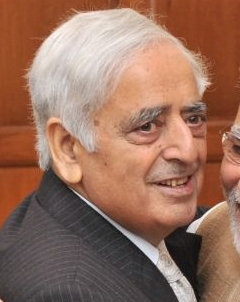
Mufti Mohammad Sayeed 6th chief minister of Jammu and Kashmir (1932–2016)

Timeline

Every January 7 on record

  1. -49 The Senate of Rome says that Caesar will be declared a public enemy unless he disbands his army, prompting the tribunes who support him to flee to where Caesar is waiting in Ravenna.

    Governing and advisory assembly of the aristocracy

    The Senate was the governing and advisory assembly of the aristocracy in the ancient Roman Republic. It was not an elected body, but one whose members were appointed by the consuls, and later by the censors, which were appointed by the aristocratic Centuriate Assembly. After a Roman magistrate served his term in office, it usually was followed with automatic appointment to the Senate.

  2. 1078 The people of Constantinople revolt, lynch the unpopular official Nikephoritzes and proclaim Nikephoros Botaneiates as emperor.

    Capital of the Eastern Roman and Ottoman empires

    Constantinople was a historical city located on a peninsula at the southeastern tip of Thrace in Europe; with the Bosporus strait and the ancient cities of Chalcedon and Chrysopolis in Bithynia, Anatolia to the east; the Golden Horn and the citadel of Galata (Pera) to the north; the Sea of Marmara to the south; and the Princes' Islands to the southeast. Constantinople served as the capital of the Roman, Byzantine, Latin, and Ottoman Empires between its consecration in 330 and the formal abolition of the Ottoman sultanate in 1922.

  3. 1325 Afonso IV becomes King of Portugal.

    King of Portugal from 1325 to 1357

    Afonso IV, called the Brave, was King of Portugal from 1325 until his death in 1357. He was the only legitimate son of King Denis of Portugal and Elizabeth of Aragon.

  4. 1558 French troops, led by Francis, Duke of Guise, take Calais, the last continental possession of England.

    French soldier and politician (1519–1563)

    François de Lorraine, 2nd Duke of Guise, 1st Prince of Joinville, and 1st Duke of Aumale, was a French general and statesman. A prominent leader during the Italian War of 1551–1559 and French Wars of Religion, he was assassinated during the siege of Orleans in 1563.

  5. 1608 Fire destroys Jamestown, Virginia.

    Town and fort established in the Virginia Colony

    The Jamestown settlement in the Colony of Virginia was the first permanent English settlement in the Americas. 5 mi (4 km) southwest of present-day Williamsburg. S.

  6. 1610 Galileo Galilei makes his first observation of the four Galilean moons: Ganymede, Callisto, Io and Europa, although he is not able to distinguish the last two until the following night.
  7. 1708 Battle of Zlatoust: Battle between Bashkir and Tatar rebels and the government troops of the Tsardom of Russia. It is one of the events of the Bashkir rebellion of 1704–1711.
  8. 1708 Bashkir rebels besiege Yelabuga.
  9. 1738 A peace treaty is signed between Peshwa Bajirao and Jai Singh II following Maratha victory in the Battle of Bhopal.
  10. 1782 The first American commercial bank, the Bank of North America, opens.
  11. 1785 Frenchman Jean-Pierre Blanchard and American John Jeffries travel from Dover, England, to Calais, France, in a gas balloon.
  12. 1835 HMS Beagle, with Charles Darwin on board, drops anchor off the Chonos Archipelago.
  13. 1867 The Kingstree jail fire kills 22 freedmen in Reconstruction-era South Carolina.
  14. 1894 Thomas Edison makes a kinetoscopic film of someone sneezing. On the same day, his employee, William Kennedy Dickson, receives a patent for motion picture film.
  15. 1904 The distress signal "CQD" is established only to be replaced two years later by "SOS".
Show 15 earlier entries from January 7
  1. 1919 Montenegrin guerrilla fighters rebel against the planned annexation of Montenegro by Serbia, but fail.
  2. 1920 The New York State Assembly refuses to seat five duly elected Socialist assemblymen.
  3. 1922 Dáil Éireann ratifies the Anglo-Irish Treaty by a 64–57 vote.
  4. 1927 The first transatlantic commercial telephone service is established from New York City to London.
  5. 1928 A disastrous flood of the River Thames kills 14 people and causes extensive damage to much of riverside London.
  6. 1931 Guy Menzies flies the first solo non-stop trans-Tasman flight (from Australia to New Zealand) in 11 hours and 45 minutes, crash-landing on New Zealand's west coast.
  7. 1935 Benito Mussolini and French Foreign Minister Pierre Laval sign the Franco-Italian Agreement.
  8. 1940 Winter War: Battle of Raate Road: The Finnish 9th Division finally defeat the numerically superior Soviet forces on the Raate-Suomussalmi road.
  9. 1948 Kentucky Air National Guard pilot Thomas Mantell crashes while in pursuit of a supposed UFO.
  10. 1950 In the Sverdlovsk air disaster, all 19 of those on board are killed, including almost the entire national ice hockey team (VVS Moscow) of the Soviet Air Force – 11 players, as well as a team doctor and a masseur.
  11. 1954 Georgetown–IBM experiment: The first public demonstration of a machine translation system is held in New York at the head office of IBM.
  12. 1955 Contralto Marian Anderson becomes the first person of color to perform at the Metropolitan Opera in Giuseppe Verdi's Un ballo in maschera.
  13. 1959 The United States recognizes the new Cuban government of Fidel Castro.
  14. 1968 Surveyor program: Surveyor 7, the last spacecraft in the Surveyor series, lifts off from Cape Canaveral Launch Complex 36A.
  15. 1972 Iberia Flight 602 crashes near Ibiza Airport, killing all 104 people on board.

Around the world

Holidays on January 7

Keep going

More to explore