Calendar date · January

What happened on January 6

On January 6, 1066: Following the death of Edward the Confessor on the previous day, the Witan meets to confirm Harold Godwinson as the new King of England; Harold is crowned the same day, sparking a succession crisis that will eventually lead to the Norman conquest of England.

Events

47

across history

Notable births

50

Notable deaths

50

Zodiac

Capricorn

People

Born on January 6

Stefanos Tzimas 2006– Greek footballer (born 2006)
MattyBRaps 2003– American rapper (born 2003)
Fiete Arp 2000– German footballer (born 2000)
Mohamed Camara 2000– Malian professional footballer
Kwon Eun-bin 2000– South Korean singer and actress (born 2000)
Jack McBain 2000– Canadian ice hockey player (born 2000)
Shuhua 2000– Taiwanese singer (born 2000)
Tyler Oliveira 2000– American YouTuber (born 2000)
Polo G 1999– American rapper
Show 9 more — notable births on January 6
Mac McClung 1999– American basketball player (born 1999)
Michel Aebischer 1997– Swiss footballer (born 1997)
Courtney Eaton 1996– Australian actress (born 1996)
Catriona Gray 1994– Filipina beauty pageant titleholder (born 1994)
Denis Suárez 1994– Spanish footballer (born 1994)
Jameis Winston 1994– American football player (born 1994)
Jay B 1994– South Korean singer (born 1994)
Pat Connaughton 1993– American basketball and baseball player (born 1993)
Jesús Manuel Corona 1993– Mexican footballer (born 1993)

People

Died on January 6

Mary Lou Kownacki Nun, peace activist, and writer (1941–2023)
Peter Bogdanovich American film director (1939–2022)
Sidney Poitier Bahamian-American actor, filmmaker, diplomat (1927–2022)
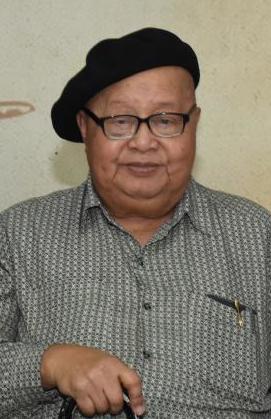
Francisco Sionil Jose Filipino writer (1924–2022)
Ashli Babbitt 2021 shooting in the US Capitol Building
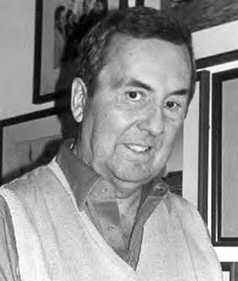
Gordon Renwick Canadian ice hockey administrator (1935–2021)
James Cross British diplomat (1921–2021)
Richard Maponya South African businessman (1920–2020)
José Ramón Fernández Cuban politician (1923–2019)
Show 9 more — notable deaths on January 6
Lamin Sanneh Gambian American scholar (1942–2019)
W. Morgan Sheppard British actor (1932–2019)
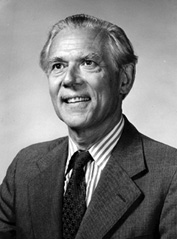
Paul Streeten Austrian-born British economics professor (1917–2019)
Octavio Lepage President of Venezuela from May to June 1993
Om Puri Indian actor (1950-2017)
Pat Harrington American actor (1929–2016)
Florence King American journalist
Christy O'Connor Jnr Irish golfer (1948–2016)
Silvana Pampanini Italian actress (1925–2016)

Timeline

Every January 6 on record

  1. 1066 Following the death of Edward the Confessor on the previous day, the Witan meets to confirm Harold Godwinson as the new King of England; Harold is crowned the same day, sparking a succession crisis that will eventually lead to the Norman conquest of England.

    King of the English from 1042 to 1066

    Edward the Confessor was King of the English from 1042 until his death in 1066. He was the last reigning monarch of the House of Wessex.

  2. 1205 Philip of Swabia undergoes a second coronation as King of the Romans.

    King of Germany from 1198 to 1208

    Philip of Swabia February/March 1177 – 21 June 1208), styled Philip II in his charters, was a member of the House of Hohenstaufen and King of Germany from 1198 until his assassination.

  3. 1322 Stephen Uroš III is crowned King of Serbia, having defeated his half-brother Stefan Konstantin in battle. His son is crowned "young king" in the same ceremony.

    King of Serbia from 1322 to 1331

    Stefan Uroš III, was King of Serbia from 6 January 1322 to 8 September 1331. Dečanski was the son of King Stefan Milutin. He defeated two other contenders to the Serbian throne.

  4. 1355 Charles IV of Bohemia is crowned with the Iron Crown of Lombardy as King of Italy in Milan.

    Holy Roman Emperor from 1355 to 1378

    Charles IV was Holy Roman Emperor from 1355 until his death in 1378. He was elected King of Germany in 1346 and became King of Bohemia that same year. He was a member of the House of Luxembourg from his father's side and the Bohemian House of Přemyslid from his mother's side; he emphasized the latter due to his lifelong affinity for the Bohemian side of his inheritance, and also because his direct ancestors in the Přemyslid line included two saints.

  5. 1449 Constantine XI is crowned Byzantine Emperor at Mystras.

    Last Byzantine Emperor from 1449 to 1453

    Constantine XI Dragases Palaiologos or Dragaš Palaeologus was the last reigning Byzantine emperor from 23 January 1449 until his death in battle at the fall of Constantinople on 29 May 1453. Constantine's death marked the definitive end of the Eastern Roman Empire, which traced its origin to Constantine the Great's foundation of Constantinople as the Roman Empire's new capital in 330.

  6. 1492 The Catholic Monarchs Ferdinand and Isabella enter Granada at the conclusion of the Granada War.
  7. 1536 The first European school of higher learning in the Americas, Colegio de Santa Cruz de Tlatelolco, is founded by Viceroy Antonio de Mendoza and Bishop Juan de Zumárraga in Mexico City.
  8. 1540 King Henry VIII of England marries Anne of Cleves.
  9. 1579 The Union of Arras unites the southern Netherlands under the Duke of Parma (Ottavio Farnese), governor in the name of King Philip II of Spain.
  10. 1641 Arauco War: The first Parliament of Quillín is celebrated, putting a temporary hold on hostilities between Mapuches and Spanish in Chile.
  11. 1661 English Restoration: The Fifth Monarchists unsuccessfully attempt to seize control of London, England. The revolt is suppressed after a few days.
  12. 1721 The Committee of Inquiry on the South Sea Bubble publishes its findings, revealing details of fraud among company directors and corrupt politicians.
  13. 1724 Sie werden aus Saba alle kommen, BWV 65, a Bach cantata, for Epiphany, is performed the first time.
  14. 1725 J. S. Bach leads the first performance of Liebster Immanuel, Herzog der Frommen, BWV 123, a chorale cantata for Epiphany.
  15. 1781 In the Battle of Jersey, the British defeat the last attempt by France to invade Jersey in the Channel Islands.
Show 15 earlier entries from January 6
  1. 1809 Combined British, Portuguese and colonial Brazilian forces begin the Invasion of Cayenne during the Napoleonic Wars.
  2. 1838 Alfred Vail and colleagues demonstrate a telegraph system using dots and dashes (this is the forerunner of Morse code).
  3. 1839 The Night of the Big Wind, the most damaging storm in 300 years, sweeps across Ireland, damaging or destroying more than 20% of the houses in Dublin.
  4. 1900 Second Boer War: Having already besieged the fortress at Ladysmith, Boer forces attack it, but are driven back by British defenders.
  5. 1912 New Mexico is admitted to the Union as the 47th U.S. state.
  6. 1912 German geophysicist Alfred Wegener first presents his theory of continental drift.
  7. 1929 King Alexander of the Serbs, Croats and Slovenes suspends his country's constitution, starting the January 6th Dictatorship.
  8. 1929 Mother Teresa arrives by sea in Calcutta, India, to begin her work among India's poorest and sick people.
  9. 1941 United States President Franklin D. Roosevelt delivers his Four Freedoms speech in the State of the Union address.
  10. 1946 The first general election ever in Vietnam is held.
  11. 1947 Pan American Airlines becomes the first commercial airline to offer a round-the-world ticket.
  12. 1951 Korean War: Beginning of the Ganghwa massacre, in the course of which an estimated 200–1,300 South Korean communist sympathizers are slaughtered.
  13. 1960 National Airlines Flight 2511 is destroyed in mid-air by a bomb, while en route from New York City to Miami.
  14. 1960 The Associations Law comes into force in Iraq, allowing registration of political parties.
  15. 1967 Vietnam War: United States Marine Corps and ARVN troops launch "Operation Deckhouse Five" in the Mekong River delta.

Around the world

Holidays on January 6

Keep going

More to explore