Calendar date · January

What happened on January 12

On January 12, 475: Byzantine Emperor Zeno is forced to flee his capital at Constantinople, and his general, Basiliscus gains control of the empire.

Events

43

across history

Notable births

50

Notable deaths

50

Zodiac

Capricorn

People

Born on January 12

Artem Kotenko 2012– Ukrainian singer (born 2012)
Yuika 2005– Japanese singer-songwriter (born 2005)
Eva Lys 2002– German tennis player (born 2002)
Sam LaPorta 2001– American football player (born 2001)
Sven Botman 2000– Dutch footballer (born 2000)
Xavier Tillman 1999– American basketball player (born 1999)
Tyler Roberts 1999– Welsh international footballer (born 1999)
Juan Foyth 1998– Argentine footballer (born 1998)
Darius Slayton 1997– American football player (born 1997)
Show 9 more — notable births on January 12
Ella Henderson 1996– English singer and songwriter (born 1996)
Allisha Gray 1995– American basketball player (born 1995)
Mike McGlinchey 1995– American football player (born 1995)
Emre Can 1994– German footballer (born 1994)
Jamel Artis 1993– American basketball player (born 1993)
D.O. 1993– South Korean singer and actor (born 1993)
Zayn Malik 1993– English singer (born 1993)
Simone Pecorini 1993– Italian footballer
Ishak Belfodil 1992– Algerian footballer (born 1992)

People

Died on January 12

Rick Garcia (activist) American LGBTQ activist (1956–2026)
Leslie Charleson American actress (1945–2025)
Claude Jarman Jr. American actor (1934–2025)
Lisa Marie Presley American singer-songwriter (1968–2023)
Sharad Yadav Indian politician (1947–2023)
Ronnie Spector American singer (1943–2022)
Sir Roger Scruton English philosopher (1944–2020)
Keith Jackson American sports announcer (1928–2018)
William Peter Blatty American writer and filmmaker (1928–2017)
Show 9 more — notable deaths on January 12
Graham Taylor English football player, manager and chairman
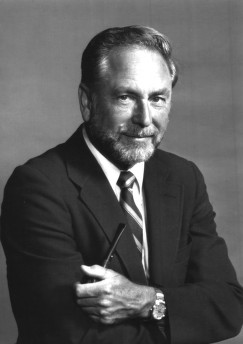
Trevor Colbourn Australian professor & academic (1927-2015)
Robert Gover American novelist
Carl Long American baseball player
Elena Obraztsova Soviet and Russian opera singer
Inge Vermeulen Brazilian-born Dutch field hockey player
Alexandra Bastedo British actress (1946–2014)
Connie Binsfeld American politician (1924–2014)
George Dement American businessman and politician (1922–2014)

Timeline

Every January 12 on record

  1. 475 Byzantine Emperor Zeno is forced to flee his capital at Constantinople, and his general, Basiliscus gains control of the empire.

    The foundation of Constantinople in 330 AD marks the conventional start of the Byzantine Empire, which fell to the Ottoman Empire in 1453 AD. Only the emperors who were recognized as legitimate rulers and exercised sovereign authority are included, to the exclusion of junior co-emperors who never attained the status of sole or senior ruler, as well as of the various usurpers or rebels who claimed the imperial title.

  2. 1528 Gustav I of Sweden is crowned King of Sweden, having already reigned since his election in June 1523.

    King of Sweden from 1523 to 1560

    Gustav Eriksson Vasa, also known as Gustav I, was King of Sweden from 1523 until his death in 1560. He was previously self-recognised Protector of the Realm (Riksföreståndare) from 1521, during the Swedish War of Liberation against King Christian II of Denmark, Norway and Sweden. Gustav rose to lead this war following the Stockholm Bloodbath, where his father was executed.

  3. 1554 Bayinnaung, who would go on to assemble the largest empire in the history of Southeast Asia, is crowned King of Burma.

    Emperor of the Toungoo dynasty

    Bayinnaung Kyawhtin Nawrahta was King of Burma from 30 April 1550 until his death in 1581, during the Toungoo dynasty. His reign is considered one of the most momentous in Burmese history, famously described as "the greatest explosion of human energy ever seen in Burma". During his rule, he assembled the largest empire in Southeast Asian history, which encompassed much of present-day Myanmar, as well as the Shan States, Lan Na, Lan Xang, Manipur, and the Ayutthaya Kingdom.

  4. 1616 The city of Belém, Brazil is founded on the Amazon River delta by Portuguese captain Francisco Caldeira Castelo Branco.

    Capital and largest city of Pará, Brazil

    Belém, often called Belém of Pará, is the capital and largest city of the state of Pará in the north of Brazil. It is the gateway to the Amazon River with a busy port, airport, and bus/coach station. Belém lies approximately 100 km upriver from the Atlantic Ocean, on the Pará River, which is part of the greater Amazon River system, separated from the larger part of the Amazon delta by Ilha de Marajó.

  5. 1792 Federalist Thomas Pinckney appointed first U.S. minister to Britain.

    American statesman, diplomat and general (1750–1828)

    Thomas Pinckney was an American statesman, diplomat, and military officer who fought in both the American Revolutionary War and the War of 1812, achieving the rank of major general. S. minister to Great Britain.

  6. 1808 John Rennie's scheme to defend St Mary's Church, Reculver, founded in 669, from coastal erosion is abandoned in favour of demolition, despite the church being an exemplar of Anglo-Saxon architecture and sculpture.
  7. 1808 The organizational meeting leading to the creation of the Wernerian Natural History Society, a former Scottish learned society, is held in Edinburgh.
  8. 1848 The Palermo rising takes place in Sicily against the Bourbon Kingdom of the Two Sicilies.
  9. 1866 The Royal Aeronautical Society is formed in London.
  10. 1872 Yohannes IV is crowned Emperor of Ethiopia in Axum, the first imperial coronation in that city in over 200 years.
  11. 1895 The National Trust is founded in the United Kingdom.
  12. 1911 The University of the Philippines College of Law is established.
  13. 1915 The United States House of Representatives rejects a proposed constitutional amendment to require states to give women the right to vote.
  14. 1916 Oswald Boelcke and Max Immelmann become the first German aviators to earn the Pour le Mérite, receive the German Empire's highest military award, for achieving eight aerial victories each over Allied aircraft.
  15. 1918 The Minnie Pit Disaster coal mining accident occurs in Halmer End, Staffordshire, in which 155 men and boys die.
Show 15 earlier entries from January 12
  1. 1932 Hattie Caraway becomes the first woman elected to the United States Senate.
  2. 1933 Casas Viejas incident: 22 peasants killed by the Security and Assault Corps in Casas Viejas, Spain.
  3. 1942 World War II: United States President Franklin D. Roosevelt creates the National War Labor Board.
  4. 1945 World War II: The Red Army begins the Vistula–Oder Offensive.
  5. 1955 A Martin 2-0-2 and Douglas DC-3 collide over Boone County, Kentucky, killing 15 people.
  6. 1962 Vietnam War: Operation Chopper, the first American combat mission and first American helicopter assault in the war, takes place.
  7. 1964 Rebels in Zanzibar begin a revolt known as the Zanzibar Revolution and proclaim a republic.
  8. 1966 Lyndon B. Johnson states that the United States should stay in South Vietnam until Communist aggression there is ended.
  9. 1967 Dr. James Bedford becomes the first person to be cryonically preserved with intent of future resuscitation.
  10. 1969 The New York Jets of the American Football League defeat the Baltimore Colts of the National Football League to win Super Bowl III in what is considered to be one of the greatest upsets in sports history.
  11. 1970 Biafra capitulates, ending the Nigerian Civil War.
  12. 1971 The Harrisburg Seven: Rev. Philip Berrigan and five other activists are indicted on charges of conspiring to kidnap Henry Kissinger and of plotting to blow up the heating tunnels of federal buildings in Washington, D.C.
  13. 1976 The United Nations Security Council votes 11–1 to allow the Palestine Liberation Organization to participate in a Security Council debate (without voting rights).
  14. 1986 Space Shuttle program: Congressman and future NASA Administrator Bill Nelson lifts off from Kennedy Space Center aboard Columbia on mission STS-61-C as a payload specialist.
  15. 1990 A seven-day pogrom breaks out against the Armenian civilian population of Baku, Azerbaijan, during which Armenians were beaten, tortured, murdered, and expelled from the city.

Around the world

Holidays on January 12

Keep going

More to explore