Calendar date · December

What happened on December 1

On December 1, 800: A council is convened in the Vatican, at which Charlemagne is to judge the accusations against Pope Leo III.

Events

62

across history

Notable births

50

Notable deaths

50

Zodiac

Sagittarius

People

Born on December 1

Ella Gross 2008– American singer, model and actress (born 2008)
Robert Irwin 2003– Australian conservationist (born 2003)
Carole Monnet 2001– French tennis player (born 2001)
Lloyd Pope 1999– Australian cricketer (born 1999)
Nico Schlotterbeck 1999– German footballer (born 1999)
Sada Williams 1997– Barbadian sprinter (born 1997)
Jung Chae-yeon 1997– South Korean actress and singer (born 1997)
Agnė Čepelytė 1995– Lithuanian tennis player (born 1995)
Jenna Fife 1995– Scottish footballer (born 1995)
Show 9 more — notable births on December 1
James Wilson 1995– English footballer
Seedy Njie 1994– English footballer
Reena Pärnat 1993– Estonian archer (born 1993)
Beau Webster 1993– Australian cricketer (born 1993)
Masahudu Alhassan 1992– Ghanaian international footballer
Javier Báez 1992– Puerto Rican baseball player (born 1992)
Linos Chrysikopoulos 1992– Greek basketball player (born 1992)
Gary Payton II 1992– American basketball player (born 1992)
Marco van Ginkel 1992– Dutch footballer (born 1992)

People

Died on December 1

Terry Griffiths Welsh snooker player (1947–2024)
Ian Redpath Australian cricketer (1941–2024)
Sandra Day O'Connor American lawyer, politician and judge (1930–2023)
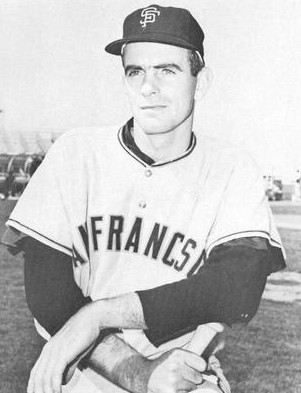
Gaylord Perry American baseball player (1938–2022)
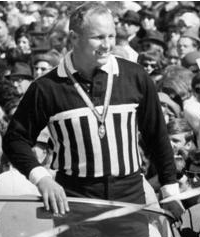
Arnie Robinson American athlete (1948–2020)
Paula Tilbrook English actress (1930–2019)
Vivian Lynn New Zealand artist
Ken Berry American actor (1933–2018)
Rob Blokzijl Dutch physicist and computer scientist
Show 9 more — notable deaths on December 1
Joseph Engelberger American pioneer in robotics
Jim Loscutoff American professional basketball player
Trevor Obst Australian rules footballer
Mario Abramovich Musical artist
Dimitrios Trichopoulos American-Greek researcher (1938–2014)
Rocky Wood Australian writer (1959–2014)
Richard Coughlan English musician
Stirling Colgate American nuclear physicist (1925–2013)
Edward Heffron American veteran of World War II

Timeline

Every December 1 on record

  1. 800 A council is convened in the Vatican, at which Charlemagne is to judge the accusations against Pope Leo III.

    Official residence of the Pope in Vatican City

    The Apostolic Palace is the official residence of the Pope, the head of the Catholic Church, located in Vatican City. It is also known as the Papal Palace, the Palace of the Vatican and the Vatican Palace. The Vatican itself refers to the building as the Palace of Sixtus V, in honor of Pope Sixtus V, who built most of the present form of the palace.

  2. 1420 Henry V of England enters Paris alongside his father-in-law King Charles VI of France.

    King of England from 1413 to 1422

    Henry V, also called Henry of Monmouth and the Hammer of the Gauls, was King of England, Lord of Ireland, and Duke of Aquitaine from 1413 until his death in 1422. Despite his relatively short reign, Henry's outstanding military successes in the Hundred Years' War against France made England one of the strongest military powers in Europe. Immortalised in Shakespeare's Henriad plays, Henry is known and celebrated as one of the greatest warrior-kings of medieval England.

  3. 1577 Courtiers Christopher Hatton and Thomas Heneage are knighted by Queen Elizabeth I of England.

    English politician and courtier (1540–1591)

    Sir Christopher Hatton was an English politician, Lord Chancellor of England and a favourite of Elizabeth I of England. He was one of the judges who found Mary, Queen of Scots guilty of treason.

  4. 1640 End of the Iberian Union: Portugal acclaims as King João IV of Portugal, ending 59 years of personal union of the crowns of Portugal and Spain and the end of the rule of the Philippine Dynasty.

    Union of Castile, Aragon and Portugal, 1580–1640

    The Iberian Union, or the Hispanic Monarchy, describes the period from 1580 to 1640 in which the Monarchy of Spain under the Habsburg dynasty, then the personal union of the crowns of Castile and Aragon, brought in personal union also the Kingdom of Portugal. It incorporated the entire Iberian Peninsula except Andorra, as well as Portuguese and Spanish overseas possessions, under the Spanish Habsburg monarchs Philip II, Philip III, and Philip IV. The union began after the Portuguese succession crisis of 1580 and the ensuing War of the Portuguese Succession, and lasted until the Portuguese Restoration War, during which the House of Braganza was established as Portugal's new ruling dynasty with the acclamation of John IV as the new king of Portugal.

  5. 1662 Diarist John Evelyn records skating on the frozen lake in St James's Park, London, watched by Charles II and Queen Catherine.

    English writer, gardener and diarist (1620–1706)

    John Evelyn, an English writer, landowner, gardener, courtier and minor government official, has become best known as a diarist. He was a founding Fellow of the Royal Society.

  6. 1768 The slave ship Fredensborg sinks off Tromøya in Norway.
  7. 1821 José Núñez de Cáceres wins the independence of the Dominican Republic from Spain and names the new territory the Republic of Spanish Haiti.
  8. 1822 Pedro I is crowned Emperor of Brazil.
  9. 1824 United States presidential election: Since no candidate received a majority of the total electoral college votes in the election, the United States House of Representatives is given the task of deciding the winner in accordance with the Twelfth Amendment to the United States Constitution.
  10. 1828 Argentine general Juan Lavalle makes a coup against governor Manuel Dorrego, beginning the Decembrist revolution.
  11. 1834 Slavery is abolished in the Cape Colony in accordance with the Slavery Abolition Act 1833.
  12. 1862 American Civil War: In his second State of the Union Address, President Abraham Lincoln reaffirms the necessity of ending slavery as ordered ten weeks earlier in the Emancipation Proclamation.
  13. 1865 Shaw University, the first historically black university in the southern United States, is founded in Raleigh, North Carolina.
  14. 1878 President Rutherford B. Hayes gets the first telephone installed in the White House.
  15. 1900 Nicaragua sells canal rights to U.S. for $5 million. The canal agreement fails in March 1901. Great Britain rejects the amended treaty.
Show 15 earlier entries from December 1
  1. 1913 The Buenos Aires Metro, the first underground railway system in the Southern Hemisphere and in Latin America, begins operation.
  2. 1913 Crete, having obtained self rule from Turkey after the First Balkan War, is annexed by Greece.
  3. 1918 Transylvania unites with Romania, following the incorporation of Bessarabia (March 27) and Bukovina (November 28) and thus concluding the Great Union.
  4. 1918 Iceland becomes a sovereign state, yet remains a part of the Danish kingdom.
  5. 1918 The Kingdom of Serbs, Croats and Slovenes (later known as the Kingdom of Yugoslavia) is proclaimed.
  6. 1919 Lady Astor becomes the first female Member of Parliament (MP) to take her seat in the House of Commons of the United Kingdom. (She had been elected to that position on November 28.)
  7. 1924 The National Hockey League's first United States–based franchise, the Boston Bruins, plays their first game in league play at home, at the still-extant Boston Arena indoor hockey facility.
  8. 1924 A Soviet-backed communist 1924 Estonian coup d'état attempt fails in Estonia.
  9. 1934 Sergei Kirov is assassinated, paving way for the repressive Great Purge, and Vinnytsia massacre by General Secretary of the Communist Party of the Soviet Union, Joseph Stalin.
  10. 1939 World War II: A day after the beginning of the Winter War in Finland, the Cajander III Cabinet resigns and is replaced by the Ryti I Cabinet, while the Finnish Parliament move from Helsinki to Kauhajoki to escape the Soviet airstrikes.
  11. 1939 The Soviet Union establishes the Finnish Democratic Republic puppet state in Terijoki.
  12. 1941 World War II: Emperor Hirohito of Japan gives his tacit approval to the decision of the imperial council to initiate war against the United States.
  13. 1941 World War II: Fiorello La Guardia, Mayor of New York City and Director of the Office of Civilian Defense, signs Administrative Order 9, creating the Civil Air Patrol.
  14. 1952 The New York Daily News reports the news of Christine Jorgensen, the first notable case of sex reassignment surgery.
  15. 1955 American Civil Rights Movement: In Montgomery, Alabama, seamstress Rosa Parks refuses to give up her bus seat to a white man and is arrested for violating the city's racial segregation laws, an incident which leads to that city's bus boycott.

Around the world

Holidays on December 1

Keep going

More to explore