Calendar date · July

What happened on July 27

On July 27, 1054: Siward, Earl of Northumbria, invades Scotland and defeats Macbeth, King of Scotland, somewhere north of the Firth of Forth. This is known as the Battle of Dunsinane.

Events

47

across history

Notable births

50

Notable deaths

50

Zodiac

Leo

People

Born on July 27

Elvina Kalieva 2003– American tennis player
Miguel Gutiérrez 2001– Spanish footballer
Max Power 1993– English footballer (born 1993)
Jordan Spieth 1993– American professional golfer (born 1993)
Tory Lanez 1992– Canadian singer (born 1992)
Wandy Peralta 1991– Dominican baseball player (born 1991)
Nick Hogan 1990– American reality TV personality (born 1990)
Paolo Hurtado 1990– Peruvian footballer (born 1990)
Cheyenne Kimball 1990– American singer-songwriter
Show 9 more — notable births on July 27
Stephen Li-Chung Kuo 1990– Taiwanese-American figure skater
Kriti Sanon 1990– Indian actress (born 1990)
Maya Ali 1989– Pakistani actress (born 1989)
Adam Biddle 1988– Australian association footballer
Yoervis Medina 1988– Venezuelan baseball player (1988–2025)
Ryan Tannehill 1988– American football player (born 1988)
Jacoby Ford 1987– American gridiron football player (born 1987)
Marek Hamšík 1987– Slovak footballer (born 1987)
Jordan Hill 1987– American basketball player (born 1987)

People

Died on July 27

Edna O'Brien Irish writer (1930–2024)
Pavel Kushnir Russian musician and dissident (1984–2024)
Tony Dow American actor (1945–2022)
Marco Aurelio Denegri Peruvian linguist, journalist, television host and sexologist
Sam Shepard American playwright and actor (1943–2017)
Einojuhani Rautavaara Finnish composer (1928–2016)
James Alan McPherson American essayist and short-story writer
Jerry Doyle American talk radio host and actor (1956–2016)
Piet de Jong Prime Minister of the Netherlands from 1967 to 1971
Show 9 more — notable deaths on July 27
Rickey Grundy Musical artist
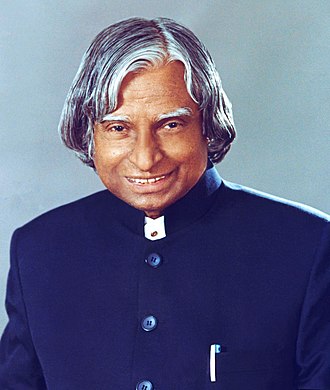
A. P. J. Abdul Kalam President of India from 2002 to 2007
Samuel Pisar Polish-American lawyer (1929-2015)
Anthony Shaw British general (1930–2015)
Richard Bolt Royal New Zealand Air Force officer (1923–2014)
George Freese American baseball player (1926–2014)
Wallace Jones American basketball player (1926–2014)
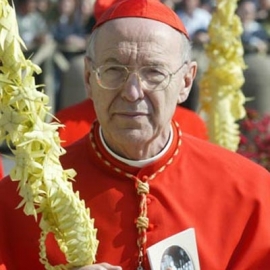
Francesco Marchisano Italian Cardinal
Paul Schell Former mayor of Seattle

Timeline

Every July 27 on record

  1. 1054 Siward, Earl of Northumbria, invades Scotland and defeats Macbeth, King of Scotland, somewhere north of the Firth of Forth. This is known as the Battle of Dunsinane.

    11th-century Earl of Northumbria in England

    Siward or Sigurd was an important earl of 11th-century northern England. The Old Norse nickname Digri and its Latin translation Grossus are given to him by near-contemporary texts. He emerged as a regional strongman in England during the reign of Cnut.

  2. 1189 Friedrich Barbarossa arrives at Niš, the capital of Serbian King Stefan Nemanja, during the Third Crusade.

    Holy Roman Emperor from 1155 to 1190

    Frederick Barbarossa, also known as Frederick I, was the Holy Roman emperor from 1155 until his death in 1190. He was elected King of Germany in Frankfurt on 4 March 1152 and crowned in Aachen on 9 March 1152. He was crowned King of Italy on 24 April 1155 in Pavia and emperor by Pope Adrian IV on 18 June 1155 in Rome.

  3. 1202 Georgian–Seljuk wars: At the Battle of Basian the Kingdom of Georgia defeats the Sultanate of Rum.

    Conflicts between the Kingdom of Georgia and the Seljuq Empire from c. 1048 to 1213

    The Georgian–Seljuk wars, also known as Georgian Crusade, is a long series of battles and military clashes that took place from 1064 until 1213, between the Kingdom of Georgia and the different Seljukid states that occupied most of South Caucasus. The conflict is preceded by deadly raids in the Caucasus by the Turks in the 11th century, known in Georgian historiography as the Great Turkish Invasion.

  4. 1214 Battle of Bouvines: Philip II of France decisively defeats Imperial, English and Flemish armies, effectively ending John of England's Angevin Empire.

    Battle ending the 1202–1214 Anglo-French Wars

    The Battle of Bouvines took place on 27 July 1214 near the town of Bouvines in the County of Flanders. It was the concluding battle of the Anglo-French War of 1213–1214. Although estimates on the number of troops vary considerably among modern historians, at Bouvines, a French army commanded by King Philip Augustus routed a larger allied army led by Holy Roman Emperor Otto IV in one of the rare pitched battles of the High Middle Ages and one of the most decisive medieval engagements.

  5. 1299 According to Edward Gibbon, Osman I invades the territory of Nicomedia for the first time, usually considered to be the founding day of the Ottoman state.

    British essayist, historian and politician (1737–1794)

    Edward Gibbon was a British essayist, historian and minor politician. His most important and influential work, The History of the Decline and Fall of the Roman Empire, was published in six volumes between 1776 and 1789, to critical and commercial success. It is known for the quality and irony of its prose, its use of primary sources, and its polemical criticism of organised religion.

  6. 1302 Battle of Bapheus: Decisive Ottoman victory over the Byzantines opening up Bithynia for Turkish conquest.
  7. 1549 The Jesuit priest Francis Xavier's ship reaches Japan.
  8. 1663 The English Parliament passes the second Navigation Act requiring that all goods bound for the American colonies have to be sent in English ships from English ports. After the Acts of Union 1707, Scotland would be included in the Act.
  9. 1689 Glorious Revolution: The Battle of Killiecrankie is a victory for the Jacobites.
  10. 1694 A Royal charter is granted to the Bank of England.
  11. 1714 The Great Northern War: The first significant victory of the Russian Navy in the naval battle of Gangut against the Swedish Navy near the Hanko Peninsula.
  12. 1775 Founding of the U.S. Army Medical Department: The Second Continental Congress passes legislation establishing "an hospital for an army consisting of 20,000 men."
  13. 1778 American Revolution: First Battle of Ushant: British and French fleets fight to a standoff.
  14. 1789 The first U.S. federal government agency, the Department of Foreign Affairs, is established (it will be later renamed Department of State).
  15. 1794 French Revolution: Maximilien Robespierre is arrested after encouraging the execution of more than 17,000 "enemies of the Revolution".
Show 15 earlier entries from July 27
  1. 1816 Seminole Wars: The Battle of Negro Fort ends when a hot shot cannonball fired by US Navy Gunboat No. 154 explodes the fort's Powder Magazine, killing approximately 275. It is considered the deadliest single cannon shot in US history.
  2. 1857 Indian Rebellion: Sixty-eight men hold out for eight days against a force of 2,500 to 3,000 mutinying sepoys and 8,000 irregular forces.
  3. 1865 Welsh settlers arrive at Chubut in Argentina.
  4. 1866 The first permanent transatlantic telegraph cable is successfully completed, stretching from Valentia Island, Ireland, to Heart's Content, Newfoundland.
  5. 1880 Second Anglo-Afghan War: Battle of Maiwand: Afghan forces led by Mohammad Ayub Khan defeat the British Army in battle near Maiwand, Afghanistan.
  6. 1890 Vincent van Gogh shoots himself and dies two days later.
  7. 1900 Kaiser Wilhelm II makes a speech comparing Germans to Huns; for years afterwards, "Hun" would be a disparaging name for Germans.
  8. 1917 World War I: The Allies reach the Yser Canal at the Battle of Passchendaele.
  9. 1919 The Chicago Race Riot erupts after a racial incident occurred on a South Side beach, leading to 38 fatalities and 537 injuries over a five-day period.
  10. 1921 Researchers at the University of Toronto, led by biochemist Frederick Banting, prove that the hormone insulin regulates blood sugar.
  11. 1929 The Geneva Convention of 1929, dealing with treatment of prisoners-of-war, is signed by 53 nations.
  12. 1940 The animated short A Wild Hare is released, introducing the character of Bugs Bunny.
  13. 1942 World War II: Allied forces successfully halt the final Axis advance into Egypt.
  14. 1947 In Vatican City, Rome, canonization of Catherine Labouré, the saint whose apparitions of the Virgin Mary originated the worldwide distribution of the Miraculous Medal.
  15. 1949 Initial flight of the de Havilland Comet, the first jet-powered airliner.

Around the world

Holidays on July 27

Keep going

More to explore