Calendar date · January

What happened on January 28

On January 28, 98: On the death of Nerva, Trajan is declared Roman emperor in Cologne, the seat of his government in lower Germany.

Events

56

across history

Notable births

50

Notable deaths

50

Zodiac

Aquarius

People

Born on January 28

Emoni Bates 2004– American basketball player (born 2004)
Liam Öhgren 2004– Swedish ice hockey player (born 2004)
Whitney Peak 2003– Ugandan and Canadian actress (born 2003)
Tabyana Ali 2002– American actress and author (born 2002)
Yoo Seon-ho 2002– South Korean actor (born 2002)
Abel Ruiz 2000– Spanish footballer (born 2000)
Dušan Vlahović 2000– Serbian footballer (born 2000)
Payton Pritchard 1998– American basketball player (born 1998)
Ariel Winter 1998– American actress (born 1998)
Show 9 more — notable births on January 28
Mimi-Isabella Cesar 1995– British rhythmic gymnast (born 1995)
Joel Bolomboy 1994– Russian basketball player
Lin Zhu 1994– Chinese tennis player (born 1994)
Maluma 1994– Colombian rapper, singer, songwriter and actor (born 1994)
Will Poulter 1993– English actor (born 1993)
Alan Williams 1993– American basketball player (born 1993)
Sergio Araujo 1992– Argentine footballer
Carl Klingberg 1991– Swedish ice hockey player (born 1991)
Siem de Jong 1989– Dutch footballer (born 1989)

People

Died on January 28

Ajit Pawar Indian politician (1959–2026)
Cicely Tyson American actress (1924–2021)
Pepe Smith Filipino-American musical artist (1947–2019)
Alexander Chancellor British journalist (1940–2017)
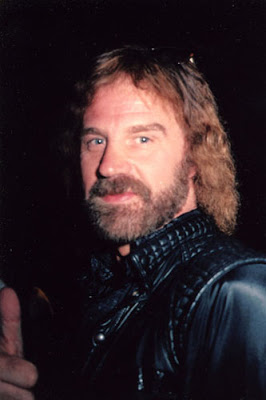
Geoff Nicholls British guitarist and keyboardist (1944–2017)
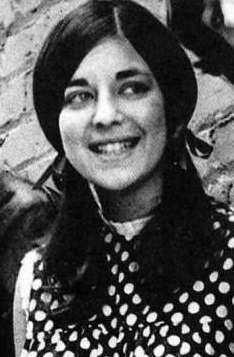
Signe Toly Anderson American singer (1941–2016)
Paul Kantner American rock musician (1941–2016)
Franklin Gene Bissell American football player and coach (1926–2016)
Buddy Cianci American politician and radio host (1941–2016)
Show 9 more — notable deaths on January 28
Bob Tizard New Zealand politician
Suraj Abdurrahman Nigerian general (1954–2015)
Yves Chauvin French chemist and Nobel Prize laureate
Lionel Gilbert Australian historian
John Cacavas American composer and conductor (1930–2014)
Harry Gamble American football coach and executive
Dwight Gustafson American classical composer
Nigel Jenkins Anglo-Welsh poet (1949–2014)
Jorge Obeid Argentine politician

Timeline

Every January 28 on record

  1. 98 On the death of Nerva, Trajan is declared Roman emperor in Cologne, the seat of his government in lower Germany.

    Calendar year

    AD 98 (XCVIII) was a common year starting on Monday of the Julian calendar. At the time, it was known as the Year of the Consulship of Augustus and Traianus. The denomination AD 98 for this year has been used since the early medieval period, when the Anno Domini calendar era became the prevalent method in Europe for naming years.

  2. 814 The death of Charlemagne, the first Holy Roman Emperor, brings about the accession of his son Louis the Pious as ruler of the Frankish Empire.

    Carolingian emperor from 800 to 814

    Charlemagne was King of the Franks from 768, King of the Lombards from 774, and Emperor of what is now known as the Carolingian Empire from 800. He united most of Western and Central Europe and was the first recognised emperor to rule from the west after the fall of the Western Roman Empire approximately three centuries earlier. Charlemagne's reign was marked by political and social changes that had lasting influence on Europe throughout the Middle Ages.

  3. 1069 Robert de Comines, appointed Earl of Northumbria by William the Conqueror, rides into Durham, England, where he is defeated and killed by rebels. This incident leads to the Harrying of the North.

    11th-century Flemish noble in England

    Robert de Comines was briefly Earl of Northumbria.

  4. 1077 Walk to Canossa: The excommunication of Henry IV, Holy Roman Emperor, is lifted after he humbles himself before Pope Gregory VII at Canossa in Italy.

    Ritual submission of Henry IV

    The Road to Canossa or Humiliation of Canossa, or, sometimes, the Walk to Canossa was the journey of the Holy Roman Emperor Henry IV to Canossa Castle in 1077, and his subsequent ritual submission there to Pope Gregory VII. It took place during the Investiture controversy and involved the Emperor seeking absolution and the revocation of his excommunication by the Pope who had been staying at the castle as the guest of Margravine Matilda of Tuscany.

  5. 1393 King Charles VI of France is nearly killed when several other dancers' costumes catch fire during a masquerade ball in Paris.

    King of France from 1380 to 1422

    Charles VI, nicknamed the Beloved and in the 19th century, the Mad, was King of France from 1380 until his death in 1422. He is known for his mental illness and psychotic episodes that plagued him throughout his life, including glass delusion.

  6. 1521 The Diet of Worms begins, lasting until May 25.
  7. 1547 Edward VI, the nine-year-old son of Henry VIII, becomes King of England on his father's death.
  8. 1568 The Edict of Torda prohibits the persecution of individuals on religious grounds in John Sigismund Zápolya's Eastern Hungarian Kingdom.
  9. 1573 Articles of the Warsaw Confederation are signed, sanctioning freedom of religion in Poland.
  10. 1591 Execution of Agnes Sampson, accused of witchcraft in Edinburgh.
  11. 1624 Sir Thomas Warner founds the first British colony in the Caribbean, on the island of Saint Kitts.
  12. 1671 Original city of Panama (founded in 1519) is destroyed by a fire when privateer Henry Morgan sacks and sets fire to it. The site of the previously devastated city is still in ruins (see Panama Viejo).
  13. 1724 The Russian Academy of Sciences is founded in St. Petersburg, Russia, by Peter the Great, and implemented by Senate decree. It is called the St. Petersburg Academy of Sciences until 1917.
  14. 1754 Sir Horace Walpole coins the word serendipity in a letter to a friend.
  15. 1813 Jane Austen's Pride and Prejudice is first published in the United Kingdom.
Show 15 earlier entries from January 28
  1. 1846 The Battle of Aliwal, India, is won by British troops commanded by Sir Harry Smith.
  2. 1851 Northwestern University becomes the first chartered university in Illinois.
  3. 1855 A locomotive on the Panama Canal Railway runs from the Atlantic Ocean to the Pacific Ocean for the first time.
  4. 1871 Franco-Prussian War: The Siege of Paris ends in French defeat and an armistice.
  5. 1878 Yale Daily News becomes the first independent daily college newspaper in the United States.
  6. 1896 Walter Arnold of East Peckham, Kent, becomes the first person to be convicted of speeding. He was fined one shilling, plus costs, for speeding at 8 mph (13 km/h), thereby exceeding the contemporary speed limit of 2 mph (3.2 km/h).
  7. 1902 The Carnegie Institution of Washington is founded in Washington, D.C., with a $10 million gift from Andrew Carnegie.
  8. 1908 Members of the Portuguese Republican Party fail in their attempted coup d'état against the administrative dictatorship of Prime Minister João Franco.
  9. 1909 United States troops leave Cuba, with the exception of Guantanamo Bay Naval Base, after being there since the Spanish–American War.
  10. 1915 An act of the U.S. Congress creates the United States Coast Guard as a branch of the United States Armed Forces.
  11. 1916 The Canadian province of Manitoba grants women the right to vote and run for office in provincial elections (although still excluding women of Indigenous or Asian heritage), marking the first time women in Canada are granted voting rights.
  12. 1918 Finnish Civil War: The Red Guard rebels seize control of the capital, Helsinki; members of the Senate of Finland go underground.
  13. 1919 The Order of the White Rose of Finland is established by Baron Gustaf Mannerheim, the regent of Finland.
  14. 1920 Foundation of the Spanish Legion.
  15. 1922 Knickerbocker Storm: Washington, D.C.'s biggest snowfall, causes a disaster when the roof of the Knickerbocker Theatre collapses, killing over 100 people.

Around the world

Holidays on January 28

Keep going

More to explore