Calendar date · January

What happened on January 16

On January 16, -1458: Hatshepsut dies at the age of 50 and is buried in the Valley of the Kings.

Events

56

across history

Notable births

50

Notable deaths

50

Zodiac

Capricorn

People

Born on January 16

Andrew Nembhard 2000– Canadian basketball player (born 2000)
Boo Seung-kwan 1998– South Korean singer (born 1998)
Jennie 1996– South Korean singer (born 1996)
Zhou Qi 1996– Chinese basketball player (born 1996)
Jonathan Allen 1995– American football player (born 1995)
Mikaela Turik 1995– Canadian womens cricketer (born 1995)
Tre'Davious White 1995– American football player (born 1995)
Mikko Lehtonen 1994– Finnish ice hockey player (born 1994)
Hannes Anier 1993– Estonian footballer (born 1993)
Show 9 more — notable births on January 16
Amandine Hesse 1993– French tennis player (born 1993)
Sungjin 1993– South Korean singer (born 1993)
Jason Zucker 1992– American ice hockey player (born 1992)
Matt Duchene 1991– Canadian ice hockey player (born 1991)
Dennis Kelly 1990– American football player (born 1990)
Nicklas Bendtner 1988– Danish footballer (born 1988)
Jorge Torres Nilo 1988– Mexican footballer (born 1988)
FKA Twigs 1988– English singer, songwriter, and dancer (born 1988)
Jake Epstein 1987– Canadian actor and singer (born 1987)

People

Died on January 16

David Lynch American filmmaker (1946–2025)
Dame Joan Plowright British actress (1929–2025)
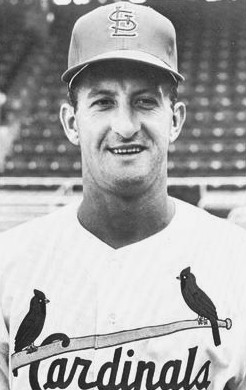
Bob Uecker American baseball player and broadcaster (1934–2025)
Ibrahim Boubacar Keita President of Mali from 2013 to 2020
Pedro Trebbau Venezuelan zoologist (1929–2021)
Chris Cramer British news journalist and executive (1948–2021)
Phil Spector American record producer and murderer (1939–2021)
Christopher Tolkien British book editor (1924–2020)
John C. Bogle American investor and business magnate (1929–2019)
Show 9 more — notable deaths on January 16
Lorna Doom American musician (1958–2019)
Chris Wilson Australian musician (1956–2019)
Ed Doolan British radio presenter (born 1941)
Oliver Ivanović Kosovo Serb politician
Eugene Cernan American astronaut and lunar explorer (1934–2017)
Joannis Avramidis Greek-Austrian artist (1922–2016)
Ted Marchibroda American football player and coach (1931–2016)
Miriam Akavia Polish-born Israeli writer, translator and Holocaust survivor
Yao Beina Chinese singer and songwriter (born 1981)

Timeline

Every January 16 on record

  1. -1458 Hatshepsut dies at the age of 50 and is buried in the Valley of the Kings.

    Pharaoh of Egypt from 1479 to 1458 BC

    Hatshepsut was the sixth pharaoh of the Eighteenth Dynasty of Egypt, ruling first as regent, then as queen regnant from c. 1479 BC until c. 1458 BC and the Great Royal Wife of Pharaoh Thutmose II.

  2. -27 Gaius Julius Caesar Octavianus is granted the title Augustus by the Roman Senate, marking the beginning of the Roman Empire.

    Roman emperor from 27 BC to AD 14

    Augustus, also known as Octavian, was the founder of the Roman Empire and the first Roman emperor from 27 BC until his death in AD 14. The reign of Augustus initiated an imperial cult and an era of imperial peace in which the Roman world was largely free of armed conflict. The principate, a style of government where the emperor showed nominal deference to the Senate, was established during his reign and lasted until the Crisis of the Third Century.

  3. 378 General Siyaj K'ak' conquers Tikal, enlarging the domain of King Spearthrower Owl of Teotihuacán.

    Mayan political figure of the Classic Period (250–800)

    Siyaj Kʼakʼ, also known as Fire is Born, was a prominent political figure mentioned in the glyphs of Classic Period (250–800 CE) Maya civilization monuments, principally Tikal, as well as Uaxactun and the city of Copan. Epigraphers originally identified him by the nickname "Smoking Frog", a description of his name glyph, but later deciphered it as Siyaj Kʼakʼ, meaning "Fire is born". He is believed by some to have been the general of the Teotihuacano ruler Spearthrower Owl.

  4. 550 Gothic War: The Ostrogoths, under King Totila, conquer Rome after a long siege, by bribing the Isaurian garrison.

    Byzantine–Gothic war in Italy

    The Gothic War between the Eastern Roman Empire during the reign of Emperor Justinian I and the Ostrogothic Kingdom of Italy took place from 535 to 554 in the Italian peninsula, Dalmatia, Sardinia, Sicily, and Corsica. It was one of the last of the many Gothic wars against the Byzantine Empire. The war had its roots in Justinian's ambition to recover the provinces of the former Western Roman Empire, which had been lost to invading barbarian tribes during the Migration Period.

  5. 929 Emir Abd-ar-Rahman III establishes the Caliphate of Córdoba.

    Title of high office in the Muslim world

    Emir, also transliterated as amir, is a word of Arabic origin that can refer to a male monarch, aristocrat, holder of high-ranking military or political office, or other person possessing actual or ceremonial authority. The title has a history of use in West Asia, East Africa, West Africa, Central Asia, and South Asia. In the modern era, when used as a formal monarchical title, it is roughly synonymous with "prince", applicable both to a son of a hereditary monarch, and to a reigning monarch of a sovereign principality, namely an emirate.

  6. 1120 Crusades: The Council of Nablus is held, establishing the earliest surviving written laws of the Crusader Kingdom of Jerusalem.
  7. 1275 Edward I permits his mother Eleanor of Provence to expel the Jews from the towns Worcester, Marlborough, Cambridge and Gloucester.
  8. 1349 Basel Massacre: Dozens to hundreds of Jews were burned to death by Christians after being accused of causing the Black Death.
  9. 1362 Saint Marcellus's flood kills at least 25,000 people on the shores of the North Sea.
  10. 1537 Bigod's Rebellion, an armed insurrection attempting to resist the English Reformation, begins.
  11. 1547 Grand Prince Ivan IV of Russia is crowned as Tsar of all Russia.
  12. 1556 Philip II becomes King of Spain.
  13. 1572 Thomas Howard, 4th Duke of Norfolk is tried and found guilty of treason for his part in the Ridolfi plot to restore Catholicism in England.
  14. 1605 The first edition of El ingenioso hidalgo Don Quijote de la Mancha (Book One of Don Quixote) by Miguel de Cervantes is published in Madrid, Spain.
  15. 1641 Reapers' War: The Junta de Braços (parliamentary assembly) of the Principality of Catalonia accepts the proposal of establishment of the Catalan Republic, under French protection.
Show 15 earlier entries from January 16
  1. 1707 The Scottish Parliament ratifies the Act of Union, paving the way for the creation of Great Britain.
  2. 1716 King Philip V of Spain promulgates the Nueva Planta decree of the Principality of Catalonia, abolishing the Catalan institutions and its legal system, being replaced by those of Castile, thus putting an end to Catalonia as separate state and becoming a province of the new French-style Kingdom of Spain.
  3. 1757 Forces of the Maratha Empire are defeated by the Durrani Empire in the Battle of Narela.
  4. 1780 American Revolutionary War: Battle of Cape St. Vincent.
  5. 1786 Virginia enacts the Statute for Religious Freedom authored by Thomas Jefferson.
  6. 1809 Peninsular War: The British defeat the French at the Battle of La Coruña.
  7. 1847 Westward expansion of the United States: John C. Frémont is appointed Governor of the new California Territory.
  8. 1862 Hartley Colliery disaster: Two hundred and four men and boys killed in a mining disaster, prompting a change in UK law which henceforth required all collieries to have at least two independent means of escape.
  9. 1878 Russo-Turkish War (1877–78): Battle of Philippopolis: Captain Aleksandr Burago with a squadron of Russian Imperial army dragoons liberates Plovdiv from Ottoman rule.
  10. 1883 The Pendleton Civil Service Reform Act, establishing the United States Civil Service, is enacted by Congress.
  11. 1900 The United States Senate accepts the Anglo-German treaty of 1899 in which the United Kingdom renounces its claims to the Samoan islands.
  12. 1909 Ernest Shackleton's expedition finds the magnetic South Pole.
  13. 1913 Indian mathematician Srinivasa Ramanujan writes his first letter to G. H. Hardy at Cambridge, stating without proof various formulae involving integrals, infinite series, and continued fractions, beginning a long correspondence between the two as well as widespread recognition of Ramanujan's results.
  14. 1919 Nebraska becomes the 36th state to approve the Eighteenth Amendment to the United States Constitution. With the necessary three-quarters of the states approving the amendment, Prohibition is constitutionally mandated in the United States one year later.
  15. 1920 The League of Nations holds its first council meeting in Paris, France.

Around the world

Holidays on January 16

Keep going

More to explore