Calendar date · January

What happened on January 13

On January 13, -27: Octavian transfers the state to the free disposal of the Roman Senate and the people. He receives Spain, Gaul, and Syria as his province for ten years.

Events

58

across history

Notable births

50

Notable deaths

50

Zodiac

Capricorn

People

Born on January 13

Iker Bravo 2005– Spanish footballer (born 2005)
Oksana Selekhmeteva 2003– Russian tennis player (born 2003)
Harley Smith-Shields 2000– Australian rugby league footballer
Douglas Augusto 1997– Brazilian footballer (born 1997)
Egan Bernal 1997– Colombian cyclist
Luis Díaz 1997– Colombian footballer
Henry Ellenson 1997– American basketball player (born 1997)
Connor McDavid 1997– Canadian ice hockey player (born 1997)
Ivan Provorov 1997– Russian ice hockey player (born 1997)
Show 9 more — notable births on January 13
Natalia Dyer 1995– American actress (born 1995)
Maxim Mamin 1995– Russian ice hockey player (born 1995)
Eros Vlahos 1995– English actor and comedian (born 1995)
Vasilije Micić 1994– Serbian basketball player (born 1994)
Max Whitlock 1993– English artistic gymnast (born 1993)
Adam Matthews 1992– Welsh footballer
Dinah Pfizenmaier 1992– German tennis player
Austin Watson 1992– American ice hockey player (born 1992)
Rob Kiernan 1991– Irish footballer

People

Died on January 13

Scott Adams American cartoonist and author (1957–2026)
David Webb Hong Kong activist investor (1965–2026)
Oliviero Toscani Italian photographer (1942–2025)
Joyce Randolph American actress (1924–2024)
Bryan Monroe American journalist (1965–2021)
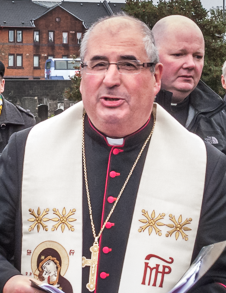
Philip Tartaglia Catholic archbishop of Glasgow (1951–2021)
Phil Masinga South African soccer player and manager (1969–2019)
Antony Armstrong-Jones British photographer and filmmaker (1930–2017)
Dick Gautier American actor (1931–2017)
Show 9 more — notable deaths on January 13
Magic Alex Greek electronics engineer (1942–2017)
Brian Bedford English actor (1935–2016)
Giorgio Gomelsky Georgian musician (1934–2016)
Lawrence Phillips American gridiron football player (1975–2016)
Mark Juddery Australian author and journalist (1971–2015)
Robert White American diplomat (1926–2015)
Bobby Collins Scottish footballer (1931–2024)
Randal Tye Thomas American politician (1978–2014)
Waldemar von Gazen Officer in the German Wehrmacht

Timeline

Every January 13 on record

  1. -27 Octavian transfers the state to the free disposal of the Roman Senate and the people. He receives Spain, Gaul, and Syria as his province for ten years.

    Roman emperor from 27 BC to AD 14

    Augustus, also known as Octavian, was the founder of the Roman Empire and the first Roman emperor from 27 BC until his death in AD 14. The reign of Augustus initiated an imperial cult and an era of imperial peace in which the Roman world was largely free of armed conflict. The principate, a style of government where the emperor showed nominal deference to the Senate, was established during his reign and lasted until the Crisis of the Third Century.

  2. 532 The Nika riots break out, during the racing season at the Hippodrome in Constantinople, as a result of discontent with the rule of the Emperor Justinian I.

    532 Byzantine revolt against Justinian I

    The Nika riots, Nika revolt or Nika sedition took place against Byzantine emperor Justinian I in Constantinople over the course of a week in 532 AD. They are often regarded as the most violent riots in the city's history, with nearly half of Constantinople being burned or destroyed and tens of thousands of people killed.

  3. 1435 Sicut Dudum, forbidding the enslavement by the Spanish of the Guanche natives in Canary Islands who had converted, or were converting to, Christianity, is promulgated by Pope Eugene IV.

    1435 papal bull forbidding enslavement of Christian natives of the Canary Islands

    Sicut dudum was a papal bull promulgated by Pope Eugene IV in Florence on January 13, 1435, which forbade the enslavement of the Indigenous Guanches people of the Canary Islands who had converted, or were converting to, Christianity and ordered, under pain of excommunication, that all such slaves be set free within 15 days.

  4. 1547 Henry Howard, Earl of Surrey, is sentenced to death for treason, on the grounds of having quartered his arms to make them similar to those of the King, Henry VIII of England.

    English poet (1516/17–1547)

    Henry Howard, Earl of Surrey,, was an English nobleman, politician and poet. He was one of the founders of English Renaissance poetry and was the last known person to have been executed at the insistence of King Henry VIII. As a fellow translator and imitator of classical Latin authors, his name is usually associated in literature with that of the poet Sir Thomas Wyatt, about whom he wrote.

  5. 1793 Nicolas Jean Hugon de Bassville, representative of Revolutionary France, is lynched by a mob in Rome.

    French journalist and diplomatist (1743–1793)

    Nicolas Jean Hugou de Bassville or Basseville, French journalist and diplomat, was born at Abbéville.

  6. 1797 French Revolutionary Wars: A naval battle between a French ship of the line and two British frigates off the coast of Brittany ends with the French vessel running aground, resulting in over 900 deaths.
  7. 1815 War of 1812: British troops capture Fort Peter in St. Marys, Georgia, the only battle of the war to take place in the state.
  8. 1822 The design of the Greek flag is adopted by the First National Assembly at Epidaurus.
  9. 1833 United States President Andrew Jackson writes to Vice President elect Martin Van Buren expressing his opposition to South Carolina's defiance of federal authority in the Nullification Crisis.
  10. 1840 The steamship Lexington burns and sinks four miles off the coast of Long Island with the loss of 139 lives.
  11. 1842 Dr. William Brydon, an assistant surgeon in the British East India Company Army during the First Anglo-Afghan War, becomes famous for being the sole survivor of an army of 4,500 men and 12,000 camp followers when he reaches the safety of a garrison in Jalalabad, Afghanistan.
  12. 1847 The Treaty of Cahuenga ends the Mexican–American War in California.
  13. 1849 Establishment of the Colony of Vancouver Island.
  14. 1849 Second Anglo-Sikh War: Battle of Chillianwala: British forces retreat from the Sikhs.
  15. 1888 The National Geographic Society is founded in Washington, D.C.
Show 15 earlier entries from January 13
  1. 1893 The Independent Labour Party of the United Kingdom holds its first meeting.
  2. 1893 U.S. Marines land in Honolulu, Hawaii from the USS Boston to prevent the queen from abrogating the Bayonet Constitution.
  3. 1895 First Italo-Ethiopian War: The war's opening battle, the Battle of Coatit, occurs; it is an Italian victory.
  4. 1898 Émile Zola's J'accuse…! exposes the Dreyfus affair.
  5. 1900 To combat Czech nationalism, Emperor Franz Joseph decrees German will be language of the Austro-Hungarian Armed Forces.
  6. 1908 The Rhoads Opera House fire in Boyertown, Pennsylvania kills 171 people.
  7. 1915 The 6.7 Mw  Avezzano earthquake shakes the Province of L'Aquila in Italy with a maximum Mercalli intensity of XI (Extreme), killing between 29,978 and 32,610.
  8. 1920 The Reichstag Bloodbath of January 13, 1920, the bloodiest demonstration in German history.
  9. 1935 A plebiscite in Saarland shows that 90.3% of those voting wish to no more being a "region occupied and governed by the United Kingdom and France".
  10. 1939 The Black Friday bushfires burn 20,000 square kilometres (7,700 sq mi) of land in Australia, claiming the lives of 71 people.
  11. 1942 Henry Ford patents a soybean car, which is 30% lighter than a regular car.
  12. 1942 World War II: First use of an aircraft ejection seat by a German test pilot in a Heinkel He 280 jet fighter.
  13. 1950 British submarine HMS Truculent collides with an oil tanker in the Thames Estuary, killing 64 men.
  14. 1950 Finland forms diplomatic relations with the People's Republic of China.
  15. 1951 First Indochina War: The Battle of Vĩnh Yên begins.

Around the world

Holidays on January 13

Keep going

More to explore